If you are asking how long does bitumen roof last, a useful planning range for a modern modified-bitumen system is about 15 to 25 years. Well-designed, correctly installed, multi-layer roofs may remain serviceable for 20 to 30 years or longer. Others fail earlier because of defective seams, poor drainage, severe exposure, or neglected damage.
That range matters because “bitumen roof” does not identify one standard product. It may mean traditional felt, an SBS or APP membrane, built-up roofing, or corrugated bitumen sheets. Membrane type, ply count, installation, hidden moisture, and maintenance history may matter more than the date on an invoice. A condition assessment is more useful than replacing a roof solely because of its age.
Quick Answer
A modified bitumen roof commonly lasts about 15 to 25 years. A sound multi-ply system with effective drainage, suitable UV protection, careful installation, and regular maintenance may reach 20 to 30 years or more. Traditional felt and corrugated bitumen products can have different service lives, so identify the installed system before estimating replacement time.
First Identify Which Bitumen Roof You Have
Published lifespan figures differ partly because contractors and property owners use the same name for several roof coverings. Modern modified bitumen is polymer-modified asphalt reinforced with polyester or fiberglass. It is commonly used on flat and low-slope roofs, although a functional “flat” roof normally has enough slope to direct water toward drains, gutters, or scuppers.
SBS contains styrene-butadiene-styrene, which gives the membrane rubber-like flexibility. That movement can be useful where roofs experience cold weather and repeated expansion and contraction. APP contains atactic polypropylene, producing a more plastic-like membrane commonly valued for heat and ultraviolet resistance. Either can perform well when the product and assembly suit the building.
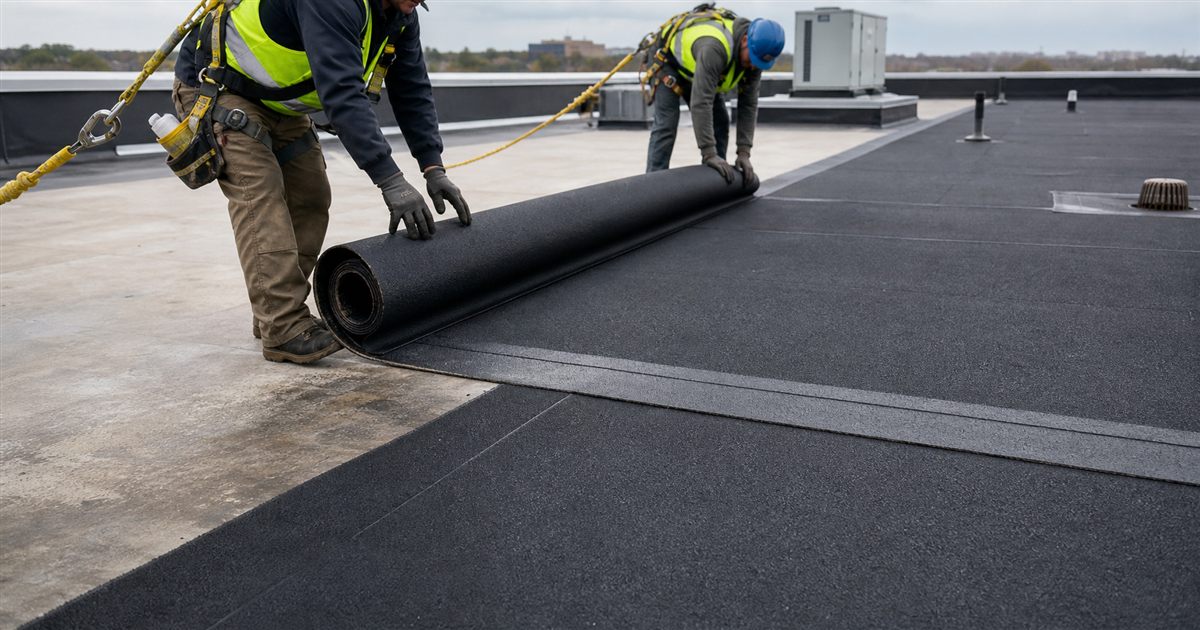
Torch application, self-adhering installation, cold-process adhesive, hot asphalt, and mechanical attachment describe installation methods. They do not determine expected life by themselves. A torch-on roof may contain SBS, APP, or a combination.
| Roofing system | Broad planning range | Why the result varies |
|---|---|---|
| SBS modified bitumen | About 15 to 30 years | Ply count, climate, reinforcement, surfacing, and workmanship |
| APP modified bitumen | About 10 to 25 years | Product specification, UV protection, details, and installation quality |
| Modified bitumen generally | Commonly 15 to 25 years | Maintained multi-layer systems may perform longer |
| Traditional bitumen felt | Often 10 to 20 years | Felt grade, layers, exposure, and workmanship |
| Built-up bituminous roofing | Often 15 to 30 years | Number of plies, surfacing, drainage, and maintenance |
| Corrugated bitumen sheets | Often 10 to 20 years | Sheet quality, fasteners, pitch, weather, and manufacturer specification |
| Coating over bitumen | System specific | A coating protects an existing roof but is not a new roof assembly |
These figures are planning ranges, not guarantees. Product documents, installation records, warranty terms, climate, and an inspection of the actual roof take priority over a generic table.
Why Lifespan Estimates Vary So Widely
Someone researching how long does bitumen roof last may find answers ranging from roughly 10 to 30 years. That does not necessarily mean one source is wrong. Some figures describe basic felt, some describe a premium multi-ply modified-bitumen system, and others refer to warranty periods rather than observed service life.
Four different ideas are often mixed together:
-
Roof age is the number of years since installation.
-
Design or expected life is a planning estimate under assumed conditions.
-
Warranty period is the time and coverage defined by a legal document.
-
Service life is how long the roof continues to perform its required function.
A 15-year material warranty does not prove the roof will fail in year 16. It also does not promise that every leak, installation defect, storm event, or maintenance issue will be covered for 15 years. Material, workmanship, and complete-system warranties may have different exclusions and responsibilities.
Condition also changes the meaning of age. A 22-year-old roof with sound seams, dry insulation, clear drains, and a documented maintenance history may still be useful. A roof installed five years ago could need major work if water has saturated the insulation or poor flashing has allowed repeated leaks.
The Roof Assembly Sets the Starting Point
Membrane quality is important, but a roof lasts as an assembly. Beneath the exposed cap sheet may be one or more base or ply sheets, a cover board, insulation, a vapor retarder, and the roof deck. Failure in any layer can shorten functional life.
Multi-ply systems provide redundancy, while a granulated cap sheet shields asphalt from sunlight and surface wear. Smooth membranes may rely on approved surfacing or coating. More layers do not guarantee success. Poor bonding, trapped moisture, incorrect overlaps, or weak terminations can undermine the specification.
Installation details are common failure points. Side laps, end laps, penetrations, parapets, roof curbs, drains, and edges must remain watertight while accommodating movement. Incorrect seam adhesion or badly designed flashing can cause premature leakage even when the open field of the membrane still appears healthy.
The supporting construction matters too. Wet insulation can lose thermal performance and allow water to migrate away from the entry point. A corroded metal deck, rotten timber deck, or structural deflection may create movement and ponding that a surface patch cannot correct.
Weather, Drainage, and Rooftop Use Change the Timeline
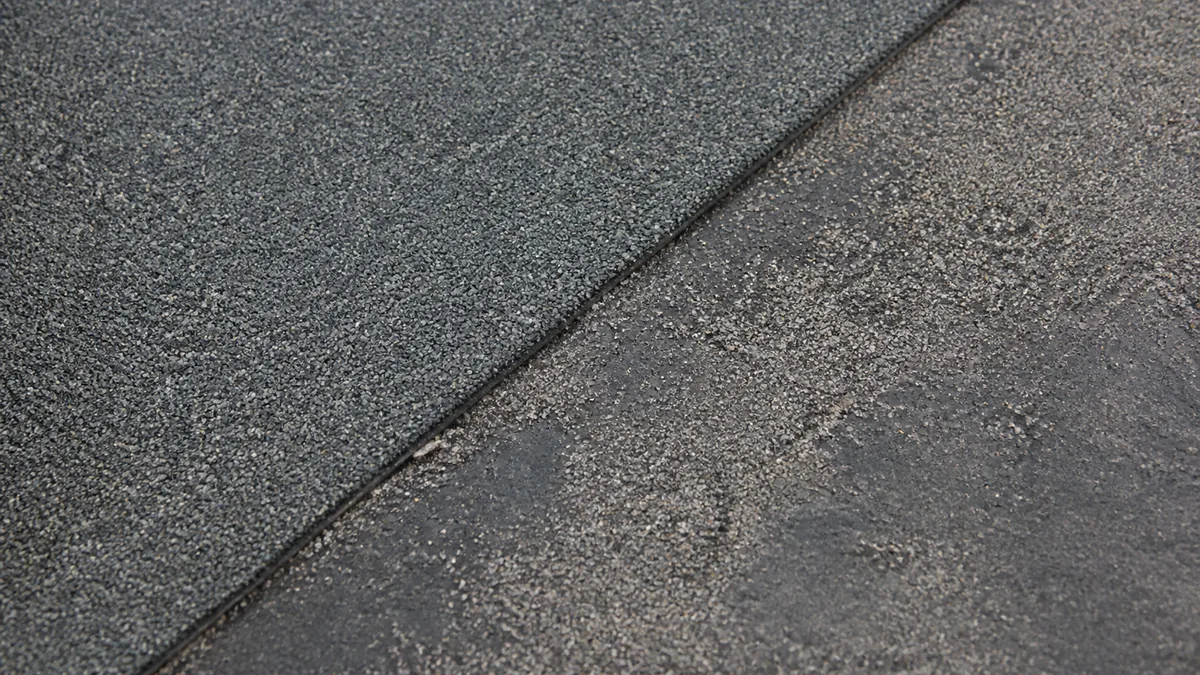
Sunlight gradually ages exposed asphalt. Mineral granules or approved reflective surfacing reduce direct ultraviolet exposure, but displaced granules can leave darker asphalt vulnerable to faster oxidation. High surface temperatures and large day-to-night temperature changes also contribute to thermal movement.
Freeze-thaw cycling can stress details and mineral surfacing where water remains. In hotter climates, intense UV exposure may accelerate hardening. Coastal salt, chemicals, hail, debris, and storms add other stresses.
Drainage is one of the largest controllable variables. Ponding water may result from blocked outlets, inadequate slope, compressed insulation, or structural deflection. It can expose weak seams, collect dirt, encourage biological growth, and add weight. A membrane repair cannot permanently solve a blocked drain or sagging deck.
Rooftop traffic is easy to underestimate. HVAC technicians, window cleaners, satellite installers, and maintenance teams can grind away granules or puncture the cap sheet with tools and equipment. Designated walk pads and controlled access help protect service routes. Unreported damage after unrelated rooftop work can shorten the roof’s life without showing immediately inside the building.
Maintenance Preserves Life but Does Not Reset It
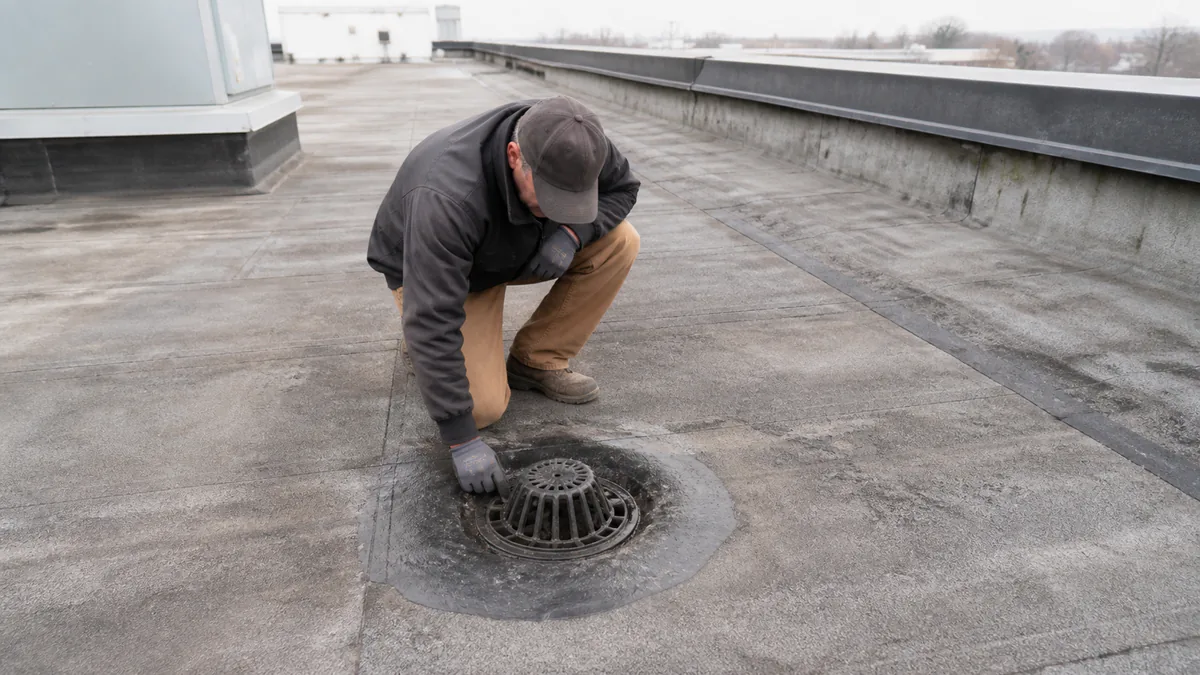
Preventative maintenance is most valuable when it finds small changes before water spreads through the assembly. The inspection schedule should follow the roof manufacturer, warranty, building use, local climate, and professional advice rather than one universal calendar. Additional checks are sensible after hail, high winds, falling debris, or rooftop construction.
A useful inspection record tracks:
-
seams, laps, flashings, edges, and terminations
-
drains, scuppers, gutters, and signs of standing water
-
cuts, punctures, blisters, wrinkles, and bare asphalt
-
changes around HVAC equipment and other penetrations
-
interior water marks, odors, or damp ceiling materials
-
who accessed the roof and what work was completed
Keeping dated photographs, invoices, warranty documents, and repair reports makes trends easier to identify. It also helps a future contractor distinguish an isolated incident from recurring system failure.
Compatible localized repairs can preserve a sound roof. Restoration or a reflective coating may also reduce weather exposure when the membrane and underlying assembly are suitable. A coating should not be applied as a cosmetic cover over active leaks, saturated insulation, unstable flashing, or a deteriorated deck. It does not reset the original installation date or turn an old assembly into a new one.
Read the Roof’s Condition, Not Just Its Age
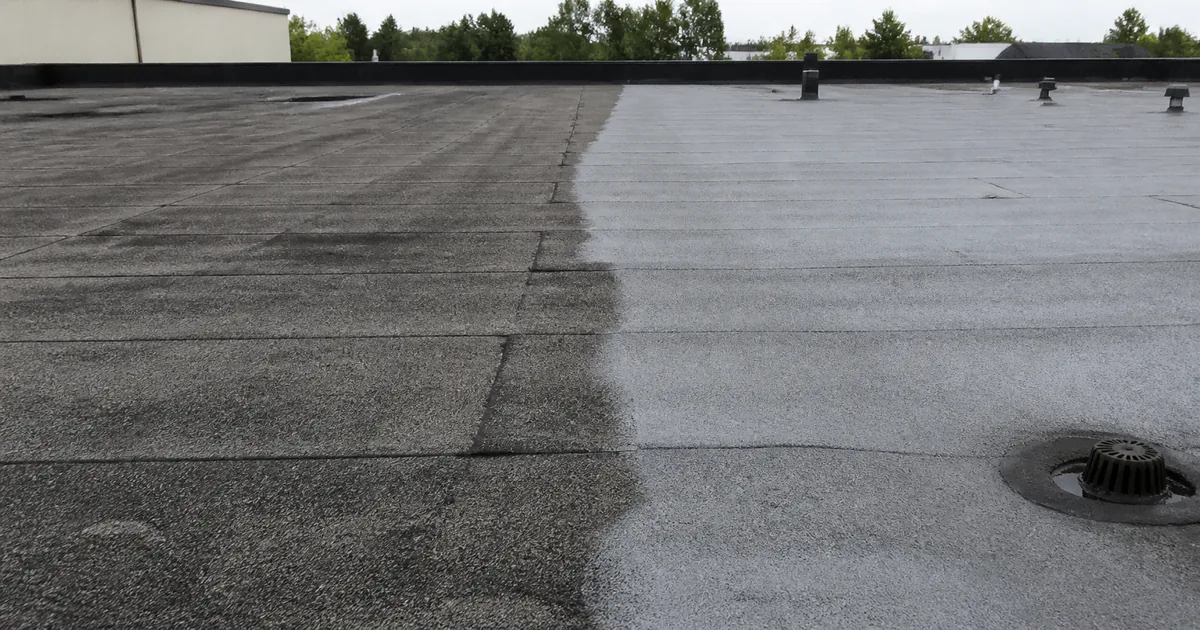
Visible aging does not always mean immediate replacement, and a clean-looking surface does not prove the layers below are dry. The pattern, extent, and cause of deterioration are more informative than one defect viewed alone.
| Observed condition | What it may mean | Sensible response |
|---|---|---|
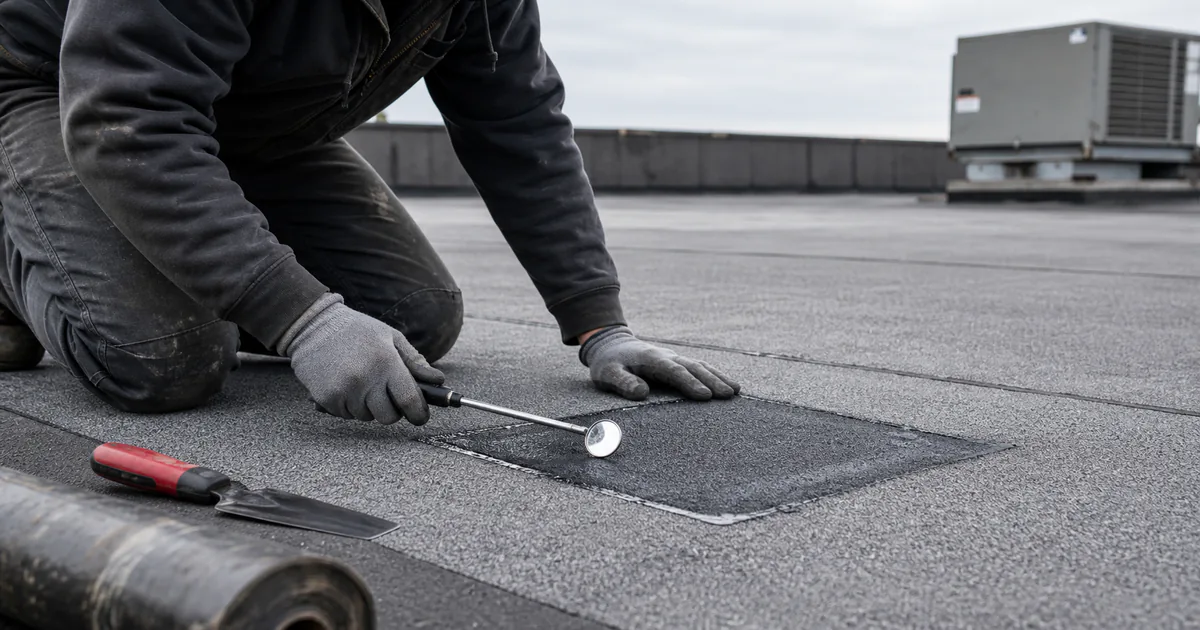
| Isolated puncture or detail failure | Local damage on an otherwise sound roof | Check adjacent membrane and underlying moisture |
| Minor aging with a dry assembly | Roof may remain repairable or restorable | Assess compatible maintenance options |
| Repeated leaks in different areas | Problems may no longer be isolated | Compare broader restoration and replacement |
| Widespread cracking or brittleness | Membrane flexibility may be exhausted | Arrange an end-of-life assessment |
| Persistent ponding | Drainage, insulation, slope, or deck issue | Investigate the cause, not only the surface |
| Soft areas or damp insulation | Moisture has entered the assembly | Map wet sections and assess replacement scope |
| Deck corrosion, rot, or movement | Supporting construction may be compromised | Restrict unsafe access and seek professional advice |
Alligator cracking, widespread granule loss, open seams, membrane shrinkage, delamination, and repeated flashing failures deserve attention. Interior stains, musty odors, mold, or damp insulation suggest moisture intrusion, but the entry point may be some distance from the visible indoor mark.
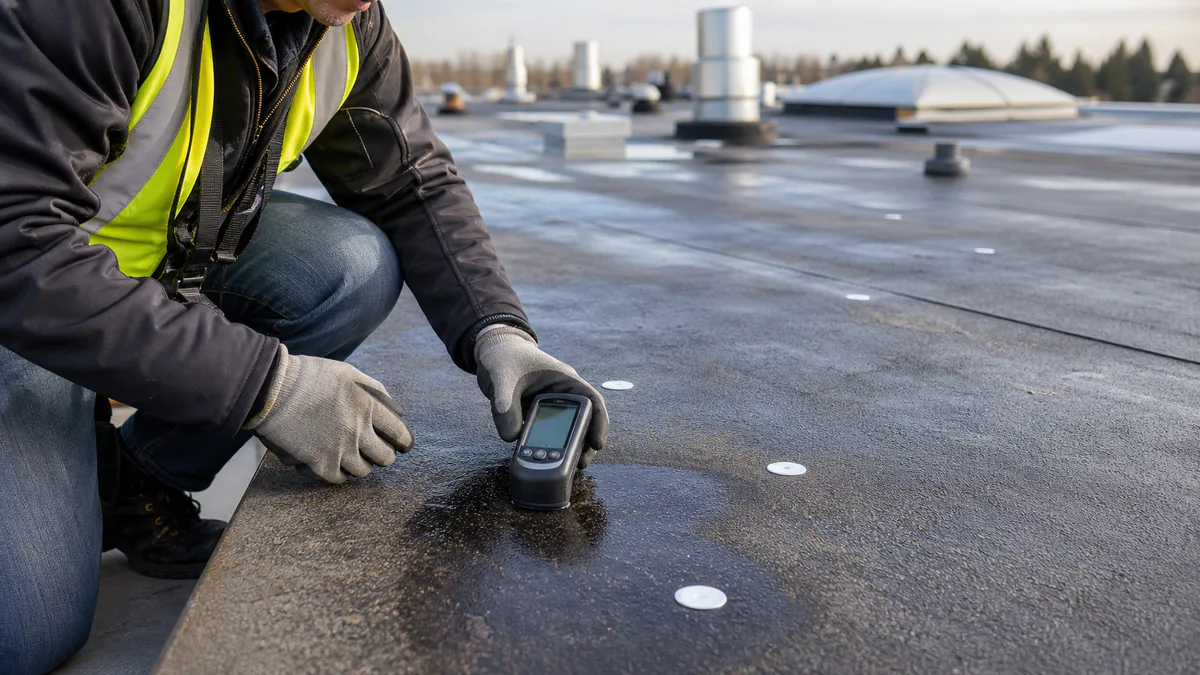
Visual inspection may be supplemented by moisture meters, infrared thermography, electronic leak detection, or carefully selected test cuts. Each method has limits. A qualified roof consultant or contractor should interpret findings in the context of weather, roof construction, and previous repairs.
Repair, Restore, Recover, or Replace?
The correct decision depends on how much of the assembly remains sound.
A localized repair addresses a limited defect such as an isolated puncture or failed detail. Restoration treats a broader but still serviceable roof, often after defects have been corrected. A recover system adds an approved new roof layer over suitable existing construction. Replacement removes some or all of the old assembly and rebuilds it as required.
Replacement becomes more reasonable when cracking and brittleness are widespread, leaks recur across unrelated areas, insulation is extensively wet, the deck has deteriorated, or repair spending no longer produces reliable performance. Building codes, the number of existing roof layers, added weight, fire requirements, warranty conditions, and local permits can also affect whether recovering is permitted.
Age should guide planning, not make the decision alone. An older dry roof may justify continued maintenance, while a younger roof with systemic moisture damage may not be economically recoverable.
What if the Installation Date Is Unknown?
Start with property records rather than guessing from appearance. Search building files, purchase surveys, permits, warranties, invoices, maintenance logs, insurance records, and previous-owner documents. Labels or markings on accessible membrane components may help identify the manufacturer and product family, although they do not prove the installation date.
A condition survey can establish a baseline when records are missing. It should document the assembly, defects, drainage, previous work, and moisture evidence. The result remains an estimate, not a precise expiration date.
Calculating Area for Replacement Planning
Bitumen Calculator can help estimate roof area and preliminary material quantities once replacement or restoration is being considered. Suppose a rectangular low-slope roof is 60 feet long and 40 feet wide:
Roof area = 60 × 40 = 2,400 square feet
If a verified project allowance for overlaps, details, parapets, and waste is 12%:
Planning area = 2,400 × 1.12 = 2,688 square feet
The 12% allowance is an example, not a universal requirement. Final quantities depend on roll dimensions, effective coverage after side and end laps, number of membrane plies, upstands, penetrations, drainage details, product specifications, and contractor measurements.
A calculator can estimate area, quantities, or a target replacement year based on an assumed lifespan. It cannot detect open seams, measure trapped moisture, verify the deck, or determine remaining useful life.
Frequently Asked Questions
Can a bitumen roof last 30 years?
Yes, some carefully designed, well-installed, multi-layer modified-bitumen roofs remain serviceable for 30 years or longer. That is not a guaranteed result. Drainage, climate, cap-sheet protection, workmanship, rooftop traffic, maintenance, and moisture within the assembly all influence whether a particular roof reaches that age.
Does SBS roofing last longer than APP roofing?
Not in every situation. SBS is valued for flexibility and movement in colder conditions, while APP is commonly selected for heat and UV performance. Product quality, ply count, surfacing, details, climate, and installation can outweigh the polymer choice. Compare complete system specifications rather than the SBS or APP label alone.
How often should a bitumen roof be inspected?
Follow the manufacturer, warranty, contractor, and building-maintenance requirements for the installed system. Many owners schedule routine professional inspections and additional checks after severe weather or rooftop work. Drains and visible problem areas may require more frequent monitoring where trees, storms, equipment servicing, or previous ponding create greater risk.
Is a 20-year-old bitumen roof worth repairing?
It can be if the membrane remains flexible, damage is localized, insulation is mostly dry, drainage works, and the deck is sound. Age alone does not settle the question. Widespread cracking, repeated unrelated leaks, saturated insulation, or major structural problems may make replacement more economical than continued patching.
Does a roof coating extend bitumen roof lifespan?
An approved coating may protect a compatible, dry, stable roof from weather and UV exposure after defects are corrected. It cannot repair saturated insulation, rotten decking, structural deflection, or systemic adhesion failure. Coating performance is product and condition specific, and applying one does not reset the roof’s original age.
Is the warranty period the same as roof life expectancy?
No. A warranty is a contract defining covered defects, duration, exclusions, maintenance duties, and remedies. Service life describes how long the roof performs. A roof may outlast its warranty, while damage excluded by the warranty can occur earlier. Read material, workmanship, and system coverage separately.
How can I tell whether insulation beneath the roof is wet?
Soft areas, recurring leaks, indoor staining, odors, or unexpected thermal performance can suggest moisture, but they are not conclusive. Professionals may use infrared surveys, moisture meters, electronic testing, or roof core samples. Findings should be interpreted with the roof design and recent weather conditions.
Which flat roofing material lasts the longest?
There is no universal winner for every building. Modified bitumen, EPDM, TPO, PVC, built-up roofing, and liquid systems have overlapping service-life ranges. Climate, roof shape, traffic, chemicals, drainage, installer skill, repair access, and maintenance can matter as much as the material category.
Plan Around Condition, Not a Countdown
The practical answer to how long does bitumen roof last is commonly 15 to 25 years for modified bitumen, with longer service possible under favorable conditions. Treat that range as a budgeting reference rather than a replacement deadline.
Confirm the system, collect its records, inspect the whole assembly, and track changes over time. If the roof is aging but dry and stable, maintenance may preserve useful service. If moisture, brittleness, or structural deterioration is widespread, a professional condition assessment provides a stronger basis for replacement planning than age alone.

About the author
Misbah Shafique
Misbah Shafique writes practical guides on bitumen and asphalt quantities, paving calculations, material estimates, and project planning. Her work helps readers understand the numbers behind road, driveway, and construction jobs.
Plan your next project
Estimate bitumen before you order.
Use the calculator to turn your area and thickness into a practical material estimate.