Knowing how to remove bitumen begins with two questions: is the material hot or cold, and what surface is underneath it? Cold residue can often be lifted, softened with a compatible specialist cleaner, degreased, and rinsed. Hot bitumen on skin is a burn emergency. Cool it under running water, do not peel it away, and seek medical help.
Bitumen resists plain water because it is petroleum-based and water-repelling. Yet the strongest available solvent is rarely the right answer. A cleaner that releases residue from steel may soften plastic, dull vehicle clear coat, or spread staining through brick. Successful removal combines the least aggressive effective method with a hidden-area test and controlled waste collection.
Quick Removal Guide
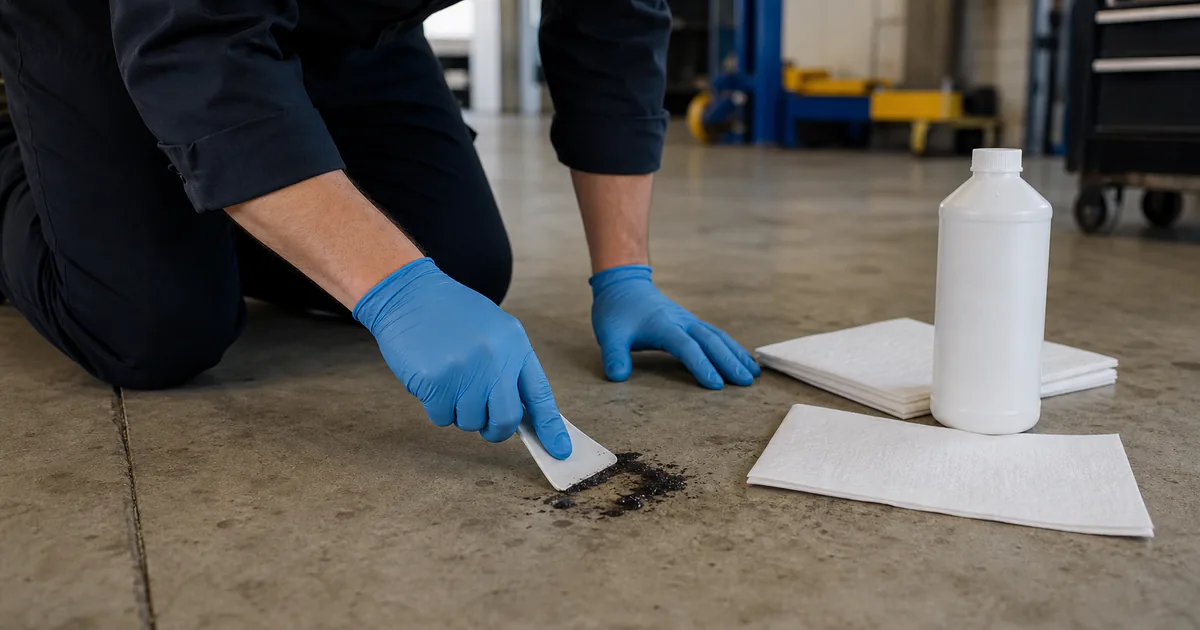
For cold bitumen, contain fresh material or let a small deposit firm up, lift excess with a surface-safe tool, apply a compatible remover, then degrease and inspect. Test first and protect against fumes and fire. Never use this cleaning sequence on a hot-bitumen burn or on unidentified old black floor adhesive.
Stop Before Cleaning if Either of These Hazards Applies
Two situations change the job completely.
Hot bitumen on skin
Hot bitumen can cause a deep thermal burn and may stay attached while holding heat against tissue. Move away from the source and cool the area under cool running water for at least 20 minutes. Keep the rest of the person warm. Remove jewelry or loose clothing nearby only if it is not stuck.
Do not use ice or apply solvent, oil, cream, or fuel. Do not pull off adhered bitumen, since this can tear damaged skin. Obtain urgent medical advice, particularly for large or deep burns, severe pain, blistering, burns to sensitive areas, breathing concerns, or any uncertainty.
Old black flooring adhesive
Black mastic beneath older flooring may contain asbestos, although color alone cannot confirm it. Sanding, grinding, scraping, or dry brushing suspect adhesive can release contaminated dust. Keep it undisturbed and arrange appropriate testing under local rules.
Why Bitumen Needs a Two-Stage Cleaner
Bitumen contains hydrocarbons that do not readily mix with water. Soap and water may remove surface dirt but usually cannot release a thick deposit. A compatible bitumen remover softens or dissolves the hydrocarbon residue. A second cleaning stage then removes the oily cleaner and loosened material.
An oil-based softener can leave a greasy mark even after the bitumen is gone. Degreasing, controlled rinsing, and drying are therefore part of the process.
Bitumen is often called tar in everyday searches, but the materials are not technically identical. Coal tar is produced differently and can present different hazards. Some commercial tar removers also handle road-bitumen spots, so confirm the label rather than relying on the name.
Choose the Method by Surface, Not by Stain Size
The right treatment depends on what must be preserved.
| Surface | Lower-risk starting point | Main concern |
|---|---|---|
| Concrete or paving | Lift the bulk, then test a masonry-compatible remover | Porosity can spread oily staining |
| Brick or natural stone | Test a specialist product in a hidden location | Solvent, oil, or acid may discolor the material |
| Painted vehicle panel | Wash away grit and use an automotive tar remover | Scraping or strong solvent can damage clear coat |
| Bare metal tool | Reduce buildup mechanically and use a metal-safe cleaner | Control vapors, fire, and contaminated residue |
| Plastic or UPVC | Use only a cleaner approved for that polymer | Solvent can soften, craze, swell, or discolor it |
| Glass | Lift gently and use a glass-compatible cleaner | Protect tint, seals, coatings, and nearby paint |
| Clothing | Firm and lift excess, then follow the care label | Heat can set the remaining stain |
| Carpet or upholstery | Blot and use fabric-approved treatment | Rubbing spreads contamination |
| Cold residue on healthy skin | Use a mild skin-safe oil, then soap and water | Industrial solvent and fuel are unsafe |
| Hot material on skin | Cool the burn and obtain medical assistance | Never peel or solvent-clean the injury |
Before treating a finished surface, test the cleaner in a concealed area for the full stated contact time. Inspect after drying for color change, softening, lost gloss, swelling, or adhesive failure.
Concrete, Brick, Stone, and Tile Need Controlled Application
To remove bitumen from concrete, begin by lifting thick, loose material with a plastic or otherwise substrate-safe scraper. Avoid spreading it across clean pores. Apply a masonry-compatible remover in the minimum quantity specified, allow its stated dwell time, and agitate only with a suitable brush. Collect the loosened residue before the final approved rinse.
Unsealed concrete and brick absorb liquids. Flooding them with solvent can carry softened bitumen deeper or enlarge a dark halo. Several controlled applications may work better than one saturated treatment, although a shadow can remain.
Natural stone needs extra care because porosity, sealers, and polish vary. A concrete-safe product may stain limestone, soften a sealer, or dull a finish. Check manufacturer guidance and test first.
Ceramic or porcelain tile may tolerate gentle lifting and an approved cleaner, but grout is more absorbent. Remove oily residue before applying paint, adhesive, waterproofing, or another finish.
High-pressure washing can help in some professional masonry work, but pressure alone does not dissolve bitumen. It can drive contaminated water outward, erode mortar, scar concrete, or force moisture into joints. Industrial water jetting requires containment, suitable equipment, runoff recovery, and trained operators.
Protect Vehicle Paint, Trim, Wheels, and Glass
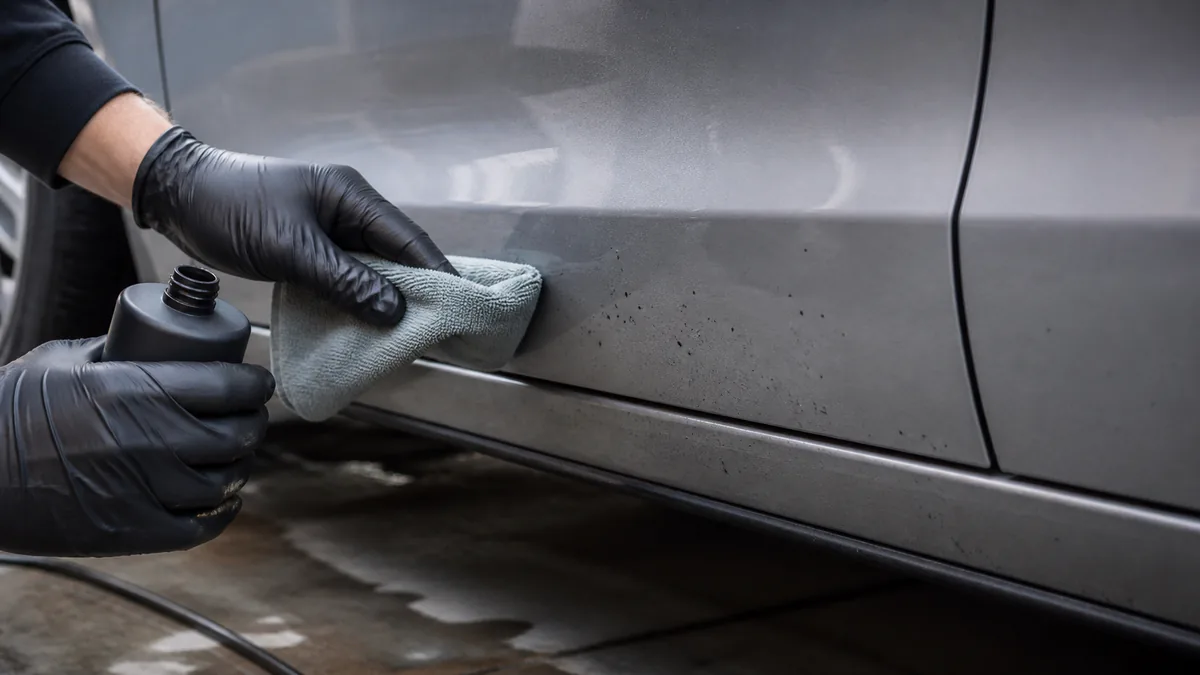
Road spots should be removed from a cool vehicle in shade. First wash the panel to eliminate grit that could scratch the clear coat. Apply an automotive-approved tar remover to the affected spot according to its label, allow it to soften the residue, and wipe gently with a clean microfiber towel. Repeat rather than scrubbing hard.
Wash the treated section afterward to remove cleaner residue. The process may reduce wax or sealant protection, so inspect the finish and renew protection when appropriate. Recently repaired paint, matte finishes, vinyl wraps, ceramic coatings, and specialty films can have separate restrictions.
Wheel finishes may be painted, powder-coated, polished, chrome, or bare metal. A product safe on body paint is not automatically safe on every wheel. Unsuitable solvent can also swell or discolor tires and seals.
On glass, use a non-scratching tool and compatible cleaner. Sharp blades can damage tint, coatings, seals, or nearby paint. Heavy tack-coat contamination on trucks or construction vehicles is better assessed professionally.
Tools and Machinery Can Tolerate More, but Safety Still Controls
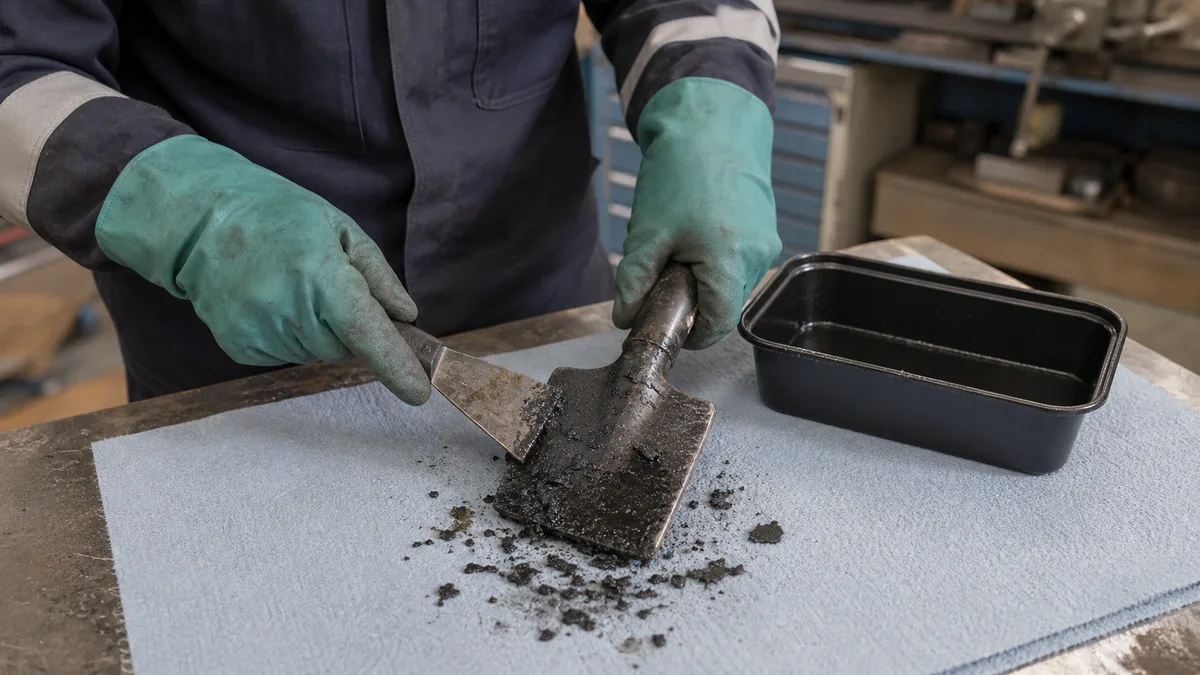
Cold buildup on a shovel or bare steel tool can often be reduced with a scraper before a commercial asphalt cleaner is applied. Painted handles, rubber grips, seals, bearings, electrical parts, and hydraulic hoses may not tolerate the same chemical as exposed metal. Isolate them from the cleaner.
Work with suitable ventilation and away from welding, heaters, cigarettes, engines, and other ignition sources. Read the safety data sheet and wear the specified PPE. Never mix removers, degreasers, bleach, acids, or other chemicals unless their manufacturers permit it.
Large equipment, tanks, floors, and production areas add confined-space, stored-energy, fume, and wastewater hazards. Industrial water jetting, dry-ice blasting, shot blasting, or mechanical removal may be suitable after assessment, but these are contractor operations.
Grinding a floor can create contaminated dust and damage the substrate. It is particularly inappropriate until old black adhesive has been assessed for asbestos. Professional removal should define containment, air or dust controls, waste classification, and the finish needed for the next flooring or coating system.
Plastic, UPVC, Wood, and Painted Surfaces Are Easy to Damage
Plastic compatibility cannot be judged by appearance. A solvent may soften one polymer, craze another, or weaken adhesive behind a trim piece. Use a remover that specifically names the plastic type or obtain manufacturer confirmation. A plastic scraper is safer than metal, but excessive pressure can still leave permanent marks.
UPVC frames sit beside seals, glass, paint, and masonry with different tolerances. If the directions permit, apply cleaner to a cloth instead of allowing runoff. Keep liquid out of joints.
Wood and parquet can absorb dissolved bitumen along the grain. Solvent may remove finish or interfere with future adhesive. A flooring specialist should assess widespread residue, thin boards, valuable timber, or uncertain legacy material.
On painted metal or walls, identify the coating before cleaning. The correct outcome may be partial improvement rather than total removal if stronger treatment would strip the paint. Where repainting is planned, confirm that no oily film remains and that the cleaned surface meets the new coating’s preparation requirements.
Clothing, Carpet, and Upholstery Require Blotting, Not Scrubbing
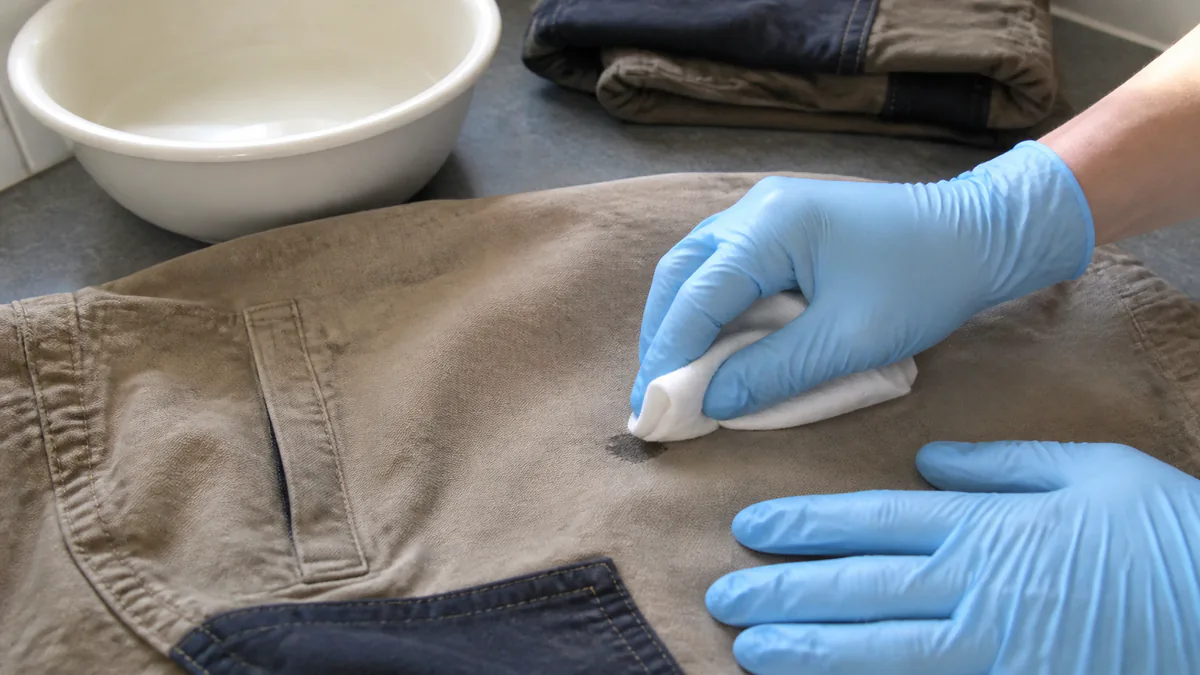
For washable clothing, let cold residue firm enough to lift without smearing. Apply only a treatment compatible with the fiber and care label. An approved oil-based softener may loosen the bitumen, after which laundry pre-treatment must remove the oily phase.
Blot from the outside of the stain toward its center. Place an absorbent layer beneath the fabric and replace it as contamination transfers. Wash according to the care label, then inspect while the item is still air-dried. Do not use a tumble dryer or iron until the mark and oily residue are gone, because heat can make the stain harder to remove.
Delicate, dry-clean-only, flame-resistant, waterproof, or high-visibility workwear may lose protective properties after solvent treatment. Give the cleaner or dry cleaner accurate information about the contaminant. Heavily soaked protective clothing may need disposal rather than cosmetic restoration.
Carpet and upholstery hold contamination in fibers, backing, and foam. Scrubbing expands the stain. Lift excess, blot with a compatible product, and avoid overwetting. Valuable furnishings, natural fibers, or contaminated padding need professional care.
Cold Bitumen on Healthy Skin Is Different From a Burn
If the residue is cold and the skin underneath is uninjured, use a mild skin-safe oil such as mineral or vegetable oil to soften small spots. Wipe gently, then wash thoroughly with soap and water. Stop if irritation, pain, broken skin, or blistering is present.
Never use gasoline, diesel, kerosene, lacquer thinner, or industrial bitumen remover on skin. These products can irritate tissue, remove protective skin oils, create harmful vapor exposure, and introduce a fire risk. Eye exposure, extensive contamination, persistent symptoms, or uncertainty needs medical or poison-control advice.
This method does not apply to hot-bitumen contact. The injury takes priority, and adhered material should remain undisturbed during cooling and medical assessment.
Estimate Cleaner Quantity Only After Choosing the Product
A calculator can estimate remover once the affected area and verified coverage rate are known. Suppose a concrete spill measures 12 feet by 8 feet:
Affected area = 12 ft × 8 ft = 96 square feet
If a selected masonry-safe remover states a coverage of 80 square feet per gallon for that type of deposit:
Required remover = 96 ÷ 80 = 1.2 gallons
This is a nominal estimate. Thick deposits, porous concrete, repeated applications, and cleanup waste may increase consumption. Coverage for one product cannot be assigned to another.
The calculator estimates quantity, not compatibility, labor, runoff control, or final appearance. Measure separate areas and include only surfaces approved for treatment.
Collect the Residue Instead of Washing It Away
Softened bitumen, used cloths, absorbents, scrapings, solvent, and rinse water may require controlled disposal. Do not send them into storm drains, soil, or ordinary wastewater systems without authorization. Prevent runoff with containment and collect residue before rinsing.
Waste rules depend on the cleaner, contaminant, quantity, and location. Keep safety data available, store waste in compatible closed containers, and use an authorized facility where required. Solvent-soaked cloths can create fire or vapor hazards.
Frequently Asked Questions
What dissolves hardened bitumen?
A specialist bitumen remover formulated for the affected surface can soften or dissolve hardened residue. Citrus-based, bio-based, and hydrocarbon products vary in strength and compatibility. Lift thick material first, test the cleaner in a hidden area, and remove its oily residue afterward. Water alone generally will not dissolve bitumen.
Can WD-40 remove bitumen?
It may soften some small cold residues, but suitability depends on the surface. It can leave an oily film and may affect certain plastics, finishes, fabric, or future coating adhesion. A purpose-made remover with clear surface instructions is easier to assess. Never apply it to a burn or damaged skin.
Can gasoline or diesel remove bitumen?
They may dissolve petroleum residue, but they are poor household cleaners because of fire, vapor, health, staining, and disposal risks. Do not use them on skin, clothing, vehicles, or indoor surfaces. Select a commercial remover approved for the substrate and follow its safety data instead.
How do I remove bitumen from concrete without leaving a stain?
Lift bulk residue without smearing, then apply a masonry-compatible remover sparingly. Collect the softened material before rinsing. Porous concrete may retain a shadow even after successful cleanup, and excessive solvent can spread it. Test first and consider professional treatment for deep or extensive contamination.
How do I remove road bitumen from car paint?
Wash grit away, cool the panel, and apply an automotive-approved tar remover as directed. Wipe gently with clean microfiber and repeat if necessary. Avoid aggressive scraping and general-purpose solvent. Wash the panel afterward and inspect whether wax, sealant, coating, wrap, or paint protection needs attention.
How do I remove bitumen from clothes?
Let cold residue firm, lift excess gently, and treat the remaining mark with a care-label-compatible product. Blot rather than rub, then remove oily residue with laundry pre-treatment and wash as permitted. Air-dry and inspect. Do not tumble dry until the stain has disappeared.
What should I do if hot bitumen touches my skin?
Cool the burn beneath cool running water for at least 20 minutes while keeping the rest of the person warm. Do not use ice, solvent, oil, or cream, and do not peel off adhered bitumen. Seek urgent medical advice, especially for extensive, deep, painful, facial, hand, foot, joint, or genital burns.
When should bitumen removal be left to professionals?
Use specialists for suspected asbestos adhesive, large indoor areas, industrial machinery, confined spaces, valuable surfaces, extensive vehicle contamination, hazardous runoff, or work requiring grinding, blasting, or high-pressure water jetting. Professional planning protects the substrate and controls exposure and waste.
Leave the Surface Ready for Its Next Use
The safest answer to how to remove bitumen is not a universal solvent. It is a sequence based on temperature, surface, finish, deposit thickness, and the purpose of the cleaned area. Lift what can be removed safely, use a compatible product, degrease, inspect after drying, and manage the waste.
For repainting, flooring, or waterproofing, appearance is only part of success. The substrate must also be free of oily residue and sound enough for the next system to bond. A quantity estimate helps with purchasing, but testing and surface compatibility decide whether the method is suitable.

About the author
Misbah Shafique
Misbah Shafique writes practical guides on bitumen and asphalt quantities, paving calculations, material estimates, and project planning. Her work helps readers understand the numbers behind road, driveway, and construction jobs.
Plan your next project
Estimate bitumen before you order.
Use the calculator to turn your area and thickness into a practical material estimate.