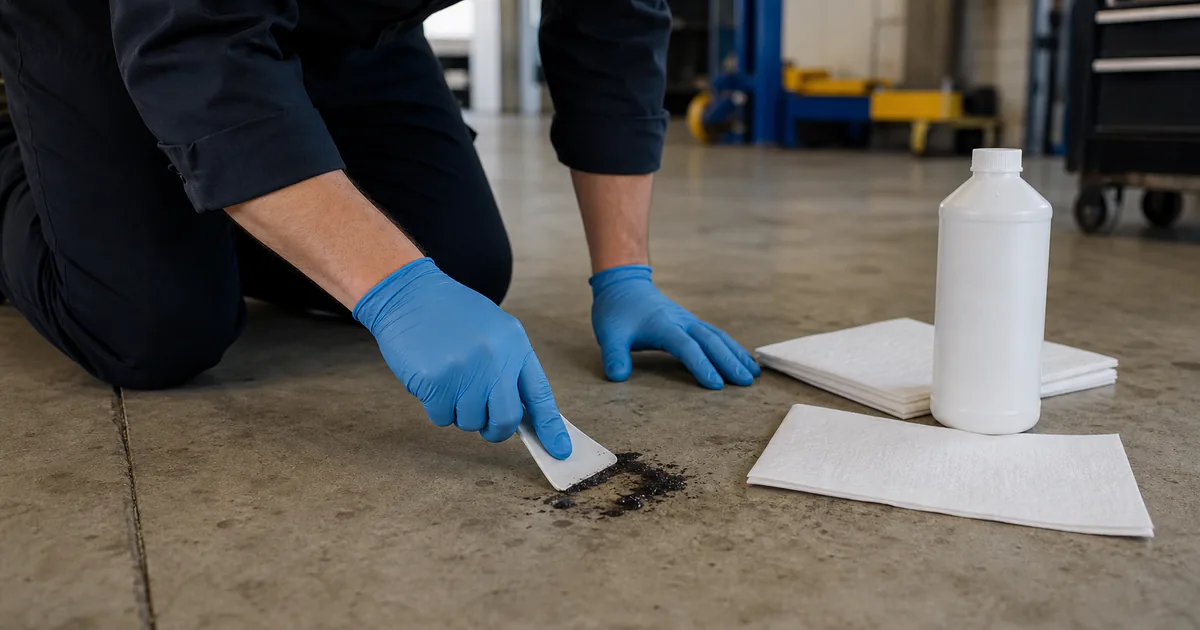
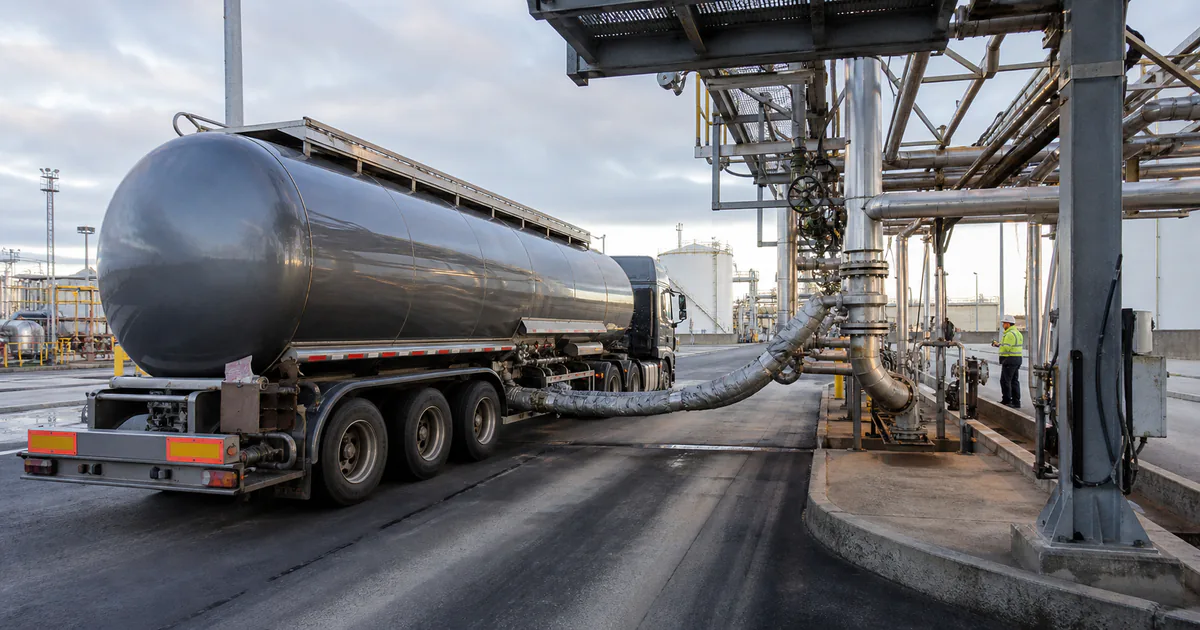
How is bitumen transported when it can be too viscous to pump at normal outdoor temperatures? Refined paving bitumen usually travels as heated bulk cargo in insulated road tankers, rail cars, or specialized ships. Where bulk infrastructure is unavailable, suppliers may use drums, bags, blocks, or suitable tank containers. Crude oil-sands bitumen follows a different supply chain and may be diluted for pipelines.
No single method or temperature fits every product. Grade, distance, weather, payload, and receiving facilities influence the plan. The cargo must arrive within its handling range without overheating or contamination. Calculations estimate mass, volume, and loads, while product data and transport rules control operations.
Short Answer
Refined bitumen is commonly carried warm in insulated road or rail tanks and heated cargo vessels so it remains pumpable. Packaged grades may travel in steel drums, bags, or containers and be melted at destination. Pipeline transport generally concerns crude bitumen diluted with lighter hydrocarbons, not every paving binder shipment.
First Separate Bitumen from Asphalt Mixture
Bitumen is the viscous petroleum binder used in road paving, roofing, waterproofing, and industrial products. In the United States, it may be called asphalt binder or asphalt cement. Asphalt mixture is the finished combination of binder, stone, sand, and filler produced at a mixing plant.
The two materials use different vehicles. Binder arrives at the plant in a tanker or another specialized package. Finished hot-mix asphalt leaves in insulated dump trucks for the paving site. Calling both loads “asphalt transportation” can hide this distinction.
Penetration-grade binder, polymer-modified bitumen, oxidized bitumen, emulsion, and cutback products have different viscosities and limits. Supplier specifications, safety data, and terminal instructions control delivery.
Canadian crude oil-sands bitumen is another material. Non-upgraded crude may be blended with condensate to form diluted bitumen, or dilbit, for pipelines. It can also be blended with synthetic crude. This differs from refined binder delivered to an asphalt plant.
Why Temperature Shapes the Logistics Plan
Viscosity describes resistance to flow. Refined bitumen becomes less viscous as its temperature rises and stiffer as it cools. Transporting it warm can make loading, circulation, pumping, and discharge practical. Insulation slows heat loss, while a heating system adds heat. They are not the same function.
Regional road trips may rely on loading temperature and insulation. Longer rail or marine journeys may use equipment to maintain or restore temperature. Specialized ships often use thermal-oil systems and heating coils. Heating schedules depend on cargo, equipment, voyage, and approved plans.
Quoting one transport temperature is misleading because conventional, hard, oxidized, and polymer-modified grades have different limits. Excessive heat can accelerate aging, increase fumes, or damage polymers. Excessive cooling can prevent transfer.
Temperature also changes cargo volume and density. As a hot load expands, a tank needs adequate unfilled space, known as ullage. Operators therefore consider both mass and usable tank volume rather than filling a vessel to its geometric capacity.
Transport Methods Compared
Each method solves a different combination of distance, shipment size, infrastructure, and product condition.
| Transport method | Typical role | Main benefit | Key constraint |
|---|---|---|---|
| Insulated road tanker | Regional bulk deliveries to asphalt plants and depots | Flexible direct routing | Road payload, heat loss, access, and scheduling |
| Rail tank car | Repeated large inland movements | Efficient volume on established rail corridors | Sidings, heating, storage, and unloading facilities required |
| Specialized bitumen ship | International or coastal bulk cargo | Moves large quantities between terminals | Purpose-built heated tanks and compatible ports are needed |
| Barge | River or short coastal distribution | Useful where inland waterways connect terminals | Route, draft, weather, and terminal limits |
| Pipeline | Continuous movement of selected crude-bitumen blends | High throughput on fixed routes | Dilution, specifications, and pipeline access determine feasibility |
| Steel drums | Exports to projects without bulk receiving systems | Familiar handling and broad availability | Packaging, residue, melting, labor, and disposal costs |
| Bags or solid blocks | Containerized semi-solid or solid shipment | Less reliance on a heated journey | Approved packaging and destination melting facilities needed |
| Heated tank container | Multimodal road, rail, and sea movement | Reduces some cargo transfers | Payload, heating, cleaning, and carrier acceptance vary |
| Emulsion tanker | Delivery of water-based bitumen emulsion | Lower-temperature handling than hot paving binder | Stability, freezing, and contamination remain concerns |
Mode selection is often multimodal. A shipment may leave a refinery by ship, enter terminal storage, move by road tanker, and finish at an asphalt plant. Packaged material may travel by truck, container vessel, and local flatbed before being processed at the project destination.
Road Tankers Handle the Final Bulk Connection
Road transport is common because asphalt plants, road projects, and industrial users are widely dispersed. An insulated bitumen tanker trailer is designed for viscous hot cargo, temperature monitoring, controlled expansion space, and compatible transfer equipment. It is not simply a fuel tanker with a different label.
Some tankers have approved heating capability, while others depend on insulation and terminal facilities. Pipes and valves cool faster than the main tank. Carriers also consider previous-load residue, grade segregation, axle limits, routes, and access.
Tank capacity does not equal legal payload. The lower applicable limit may come from usable tank volume, the vehicle’s tare weight, gross combination weight, axle-load rules, cargo density, or route legislation. A tanker can reach its permitted mass before its shell is volumetrically full.
Delivery timing affects temperature. Queues or unavailable storage can cool cargo and disrupt production. Supplier and receiver coordinate grade, quantity, arrival, tank assignment, access, and receiving capacity.
Rail and Marine Transport Cover Longer Routes
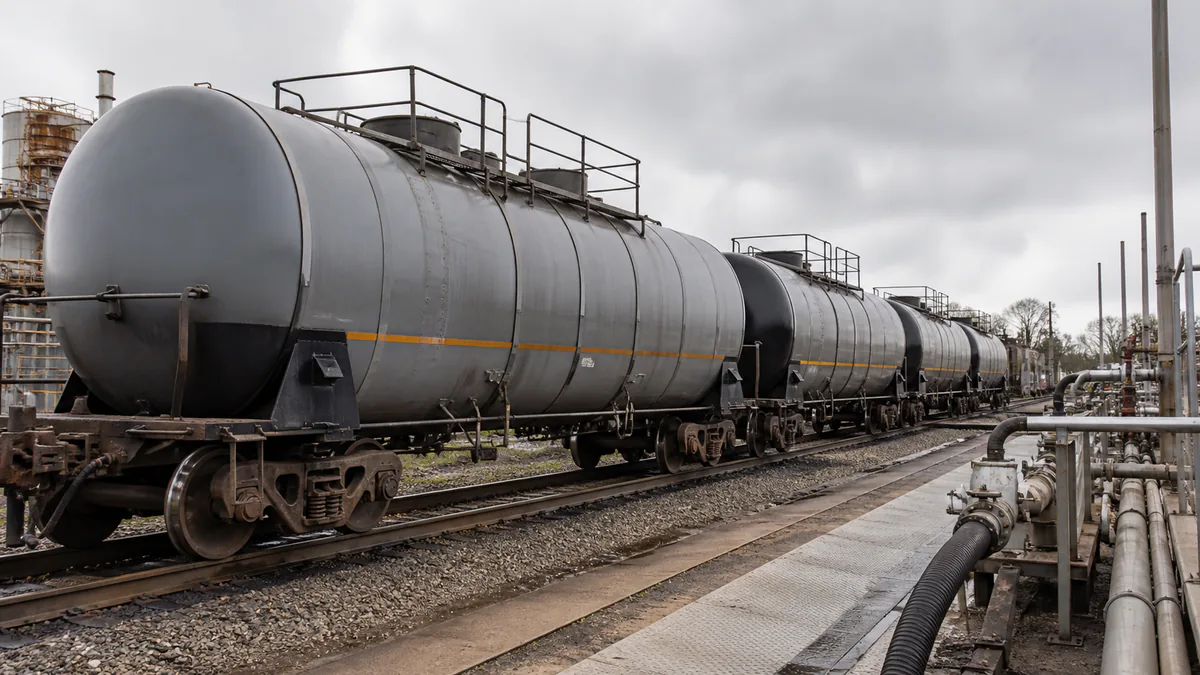
Rail tank cars suit regular inland flows between facilities with dedicated sidings. They can move more cargo per train than road vehicles, but they reduce flexibility. Both ends need compatible storage, transfer systems, product identification, and a plan for restoring pumpability if the load cools during transit.
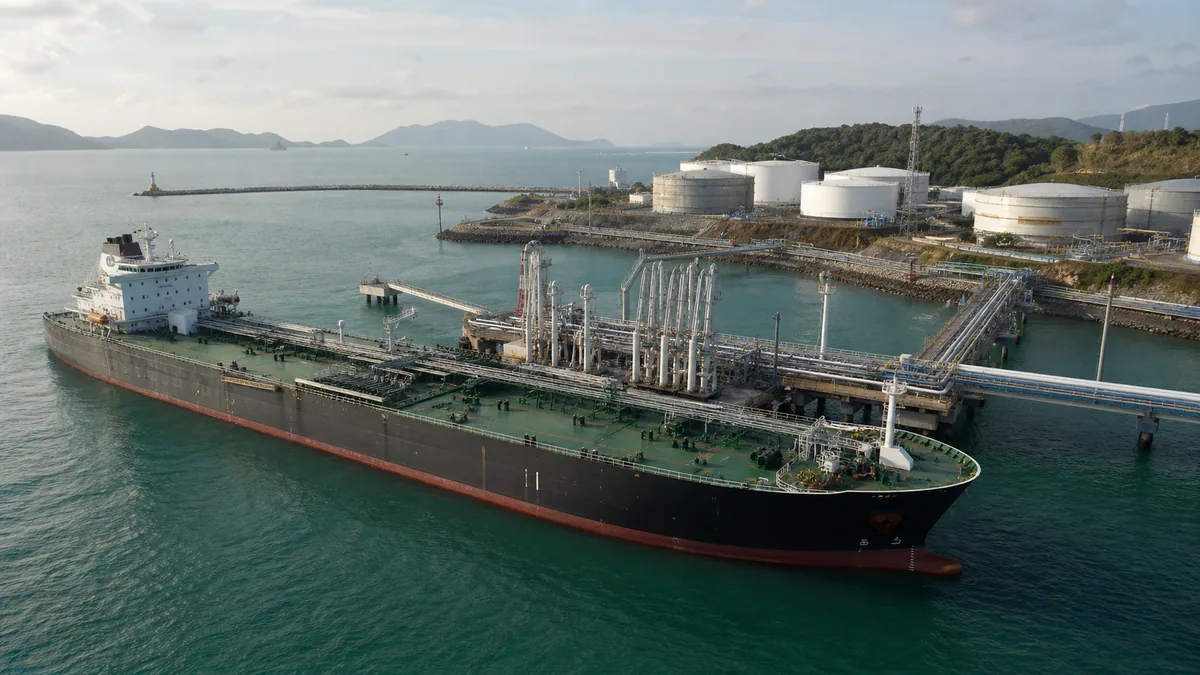
Specialized carriers handle large coastal and international shipments. Insulated cargo tanks, heating coils or thermal oil, and level instruments support temperature control, cargo distribution, and vessel stability.
The port needs compatible manifolds, insulated lines, storage, monitoring, emergency arrangements, and trained personnel. Weather, customs, berth availability, and onward transport affect scheduling.
A ship may carry separate grades in segregated tanks, but preventing cross-contamination remains a major concern. Even a small amount of incompatible residue can alter a performance-grade or polymer-modified binder. Cleaning requirements and the previous cargo therefore influence carrier selection and cost.
When Drums, Bags, and Containers Make Sense
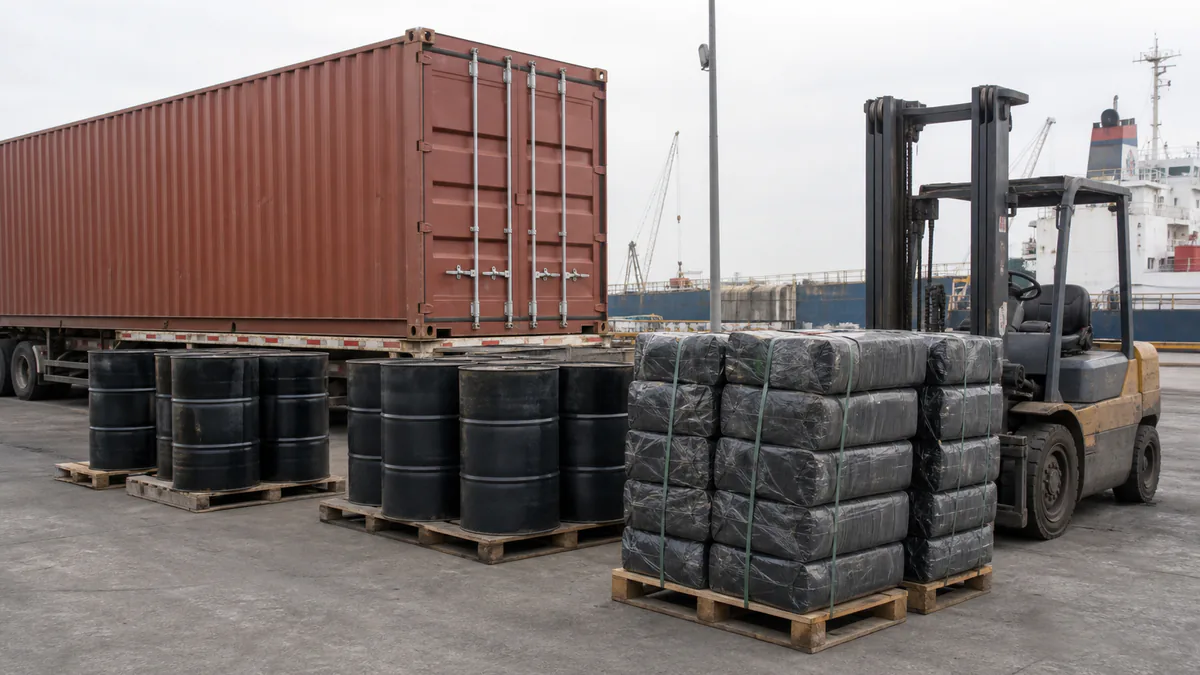
Packaged bitumen suits smaller or irregular demand and destinations without bulk terminals. Steel drums fit standard containers and common freight systems. The receiver removes packaging and melts the material using suitable industrial equipment.
Drums add steel, labor, residue, storage, and disposal costs. Damage, corrosion, or poor stacking can also cause loss. They may still be economical when the alternative is building heated bulk infrastructure for a limited project.
Bags, liners, and blocks move approved products in a cooled solid or semi-solid state. Suitability depends on grade, package design, climate, container limits, carrier acceptance, and contamination-free melting.
A tank container can transfer between truck, rail, and ship without repeated cargo handling. A generic flexitank is not automatically suitable. Temperature rating, support, liner compatibility, heating, payload, and carrier acceptance require verification.
Pipeline Transport Refers to a Different Bitumen Stream
Refined paving bitumen is not routinely sent through every petroleum pipeline. Pipeline discussions usually involve crude bitumen from oil-sands production. Because it is too viscous for conventional movement in its untreated state, it may be diluted with condensate or another lighter hydrocarbon. The resulting dilbit has flow characteristics suitable for an approved pipeline specification.
Diluent adds transported volume and affects viscosity, vapor behavior, refinery processing, spill response, and value. Certain blends use synthetic crude and may be called synbit.
This route is part of crude-oil logistics, not the usual last-mile delivery of paving-grade binder. After refining and formulation, asphalt binder still needs transport from a refinery or terminal to the mixing plant in the specified form.
Planning a Shipment from Quantity to Loads
A bitumen calculator can connect required mass, density, volume, and vehicle payload. Planning should begin with tonnes because road-paving specifications and purchase contracts commonly use mass. Volume is then estimated using a density appropriate to the product and reference temperature.
For an illustrative tanker calculation, assume a project needs 240 metric tonnes and the verified legal net payload for the selected vehicle and route is 24 tonnes:
Number of loads = required mass ÷ legal net payload
240 tonnes ÷ 24 tonnes per load = 10 loads
Ten is the theoretical count of full loads. If the requirement were 250 tonnes, the calculation would produce 10.42, so operations would need 11 trips unless the final quantity or vehicle plan changed.
The 24-tonne assumption is not universal. Actual payload depends on:
-
vehicle tare and gross-weight limits
-
axle limits and route restrictions
-
usable tank capacity and ullage
-
density at the relevant temperature
-
grade segregation and compartment design
-
partial-load stability and carrier rules
-
weighbridge measurements and contract tolerances
For drums, replace vehicle payload with verified net product mass per drum, then consider pallets, container payload, packaging weight, and permitted stacking. Calculators support procurement, but carrier and regulatory checks determine the executable load plan.
Safe Transport Is a Controlled Industrial Operation
Hot bitumen can cause severe burns. Water contact may create steam, violent foaming, or splashing. Hose failure, blocked lines, overfilling, and uncontrolled pressure can injure workers and damage equipment.
Fumes also require risk assessment. Hydrogen sulfide may be present in the vapor space of some bitumen products, particularly around enclosed tanks and openings, but concentration is not identical in every cargo. Product data, monitoring requirements, ventilation, access control, and terminal procedures govern the response.
Plans address temperature, levels, pressure relief, emergency isolation, exclusion zones, spills, access, and PPE. Loading, heating, connections, and unloading belong to trained personnel following approved systems.
Legal status varies. Product composition, temperature, package, quantity, and jurisdiction determine whether and how dangerous-goods rules such as ADR, IMDG, US DOT, or Canadian TDG requirements apply. The shipping description and safety data must be checked for the actual consignment rather than assuming every bitumen load has one classification.
Documents and Site Readiness Prevent Delays
A shipment normally references the purchase order, grade, quantity, batch traceability, certificate of analysis where required, safety data, transport documents, and regulatory declarations.
Before arrival, the receiving facility verifies that the assigned tank has enough safe capacity and contains a compatible grade. It also confirms access, transfer-equipment compatibility, staffing, emergency arrangements, and the accepted delivery-temperature window. A paperwork mismatch can be as disruptive as a mechanical fault if the plant cannot place the product in the intended silo.
Cross-contamination deserves special attention when carriers change products. Paving grades, polymer-modified binders, emulsions, and cutbacks are not interchangeable. Dedicated equipment or an approved cleaning and preloading process protects product performance. Residue also affects the amount ultimately delivered, so contracts should state how quantity is measured and reconciled.
Frequently Asked Questions
What temperature is bitumen transported at?
There is no universal temperature. The required range depends on grade, viscosity, equipment, transit time, and supplier limits. Many paving binders travel hot enough to remain pumpable, while emulsions and packaged solid products follow different conditions. The product specification and maximum safe handling temperature control the plan.
How does a bitumen tanker keep its cargo hot?
Tank insulation slows heat escaping to the environment. Some vehicles also have an approved heating arrangement, but not every road tanker heats continuously during travel. Loading temperature, journey length, weather, insulation quality, and receiving arrangements determine whether retained heat is sufficient.
Can bitumen be transported without heating?
Yes, when the product and packaging are designed for it. Bitumen can travel after cooling in drums, bags, blocks, or specialized container systems, then be melted at destination. Emulsions also have different temperature needs. Packaging compatibility and receiving equipment must be confirmed.
How is bitumen transported by ship?
Bulk cargo travels in specialized carriers with insulated tanks, temperature-control equipment, cargo pumps, and monitoring systems suited to viscous material. The destination requires compatible berth connections and heated storage. Smaller packaged shipments can also travel in conventional freight containers when the approved packaging and carrier rules allow it.
Is bitumen transported through pipelines?
Crude oil-sands bitumen may be diluted with condensate or blended with synthetic crude so it meets pipeline-flow specifications. This is different from transporting finished paving binder to an asphalt plant. Pipeline feasibility depends on the crude blend, network, operating rules, and destination refinery.
How many tonnes can a bitumen tanker carry?
No single capacity applies worldwide. Legal net payload depends on vehicle tare, tank size, gross and axle-weight limits, route rules, cargo density, and safe ullage. A tanker may reach its legal mass limit before using its full internal volume. Confirm the carrier’s permitted payload for the actual route.
Are bitumen drums cheaper than bulk delivery?
It depends on shipment scale and destination infrastructure. Drums add packaging, handling, melting, residue, and disposal costs. Bulk transport usually suits steady large-volume demand, while drums may be practical for remote projects or buyers without heated tanks. Compare total landed and handling cost, not freight alone.
Is bitumen always regulated as dangerous goods?
Not under one universal classification. Composition, carriage temperature, quantity, packaging, and national or international rules affect its status. The shipper and carrier must use the current safety data and applicable transport regulations for that specific consignment.
From Refinery Gate to Receiving Tank
The practical answer to how is bitumen transported depends on the product’s physical state and the infrastructure at both ends. Regional bulk cargo favors insulated road tankers. Large inland or international flows may use rail and specialized vessels, while drums and bags serve destinations without bulk systems. Pipelines mainly concern suitably diluted crude bitumen.
Successful bitumen transportation keeps three plans aligned: product quality, logistics, and safety. A quantity calculator can estimate volume and load count, but it cannot approve a temperature, vehicle, package, or legal payload. Those decisions require verified product data, suitable equipment, prepared receiving facilities, trained operators, and the rules governing the route.

About the author
Misbah Shafique
Misbah Shafique writes practical guides on bitumen and asphalt quantities, paving calculations, material estimates, and project planning. Her work helps readers understand the numbers behind road, driveway, and construction jobs.
Plan your next project
Estimate bitumen before you order.
Use the calculator to turn your area and thickness into a practical material estimate.