The main bitumen driveway benefits include cost efficiency over large areas, less dust and mud than gravel, useful surface traction, rapid construction and a natural stone finish. These advantages apply to a properly designed sprayed bitumen seal built over a stable, compacted base. Raw bitumen alone is not a complete driveway.
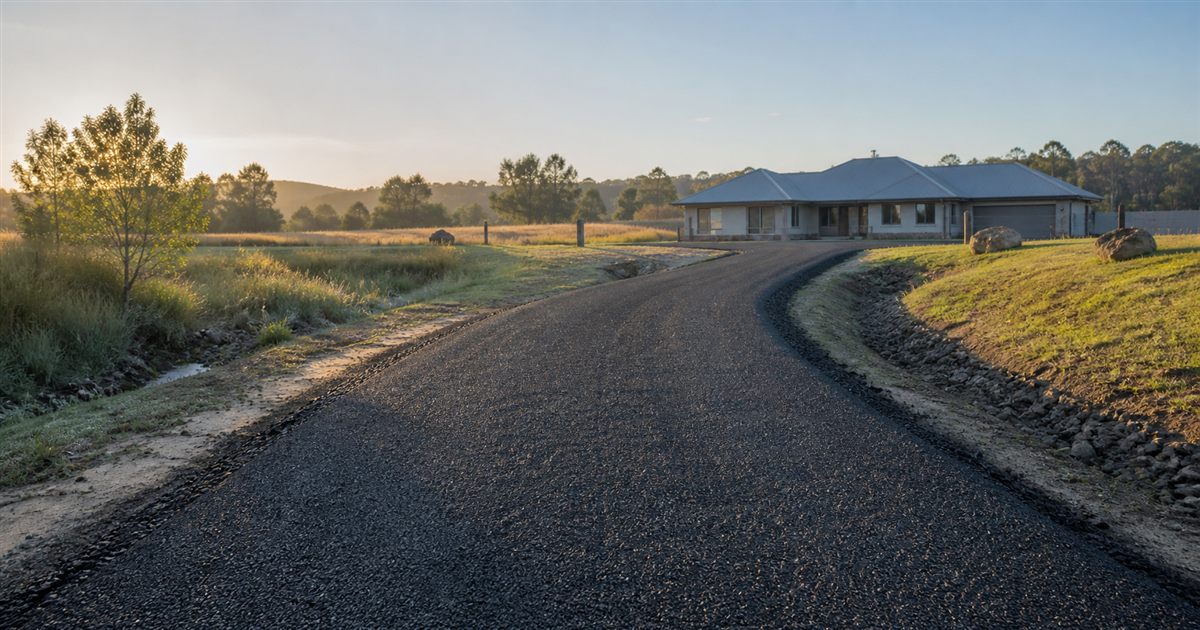
In Australia and New Zealand, this surface is commonly called a bitumen driveway or sprayed seal. North American property owners may know it as chip seal or tar and chip. In each case, a viscous bitumen binder is sprayed over a prepared base and covered with aggregate chips that are rolled into the binder.
This option can be especially practical for farms, acreage properties and long private roads where asphalt concrete or decorative paving would cost considerably more. Its value still depends on drainage, base strength, aggregate selection, installation quality, traffic and planned maintenance.
Quick Answer
A sprayed bitumen driveway can provide an economical, dust-reducing and water-resistant surface for a long rural entrance or low-to-moderate traffic area. It also offers textured traction and faster construction than many alternatives. A strong base and effective drainage are necessary because the thin surface seal cannot correct unstable soil or structural pavement failure.
Bitumen Driveway Benefits at a Glance
| Benefit | Why it matters | Important condition |
|---|---|---|
| Cost efficiency over large areas | Can reduce the cost of sealing a long rural driveway | The existing or newly built base must be suitable |
| Dust and mud control | Creates a bound surface instead of loose gravel | Edges, runoff and drainage need protection |
| Water-resistant surface | Helps limit rainfall entering the base from above | Does not solve groundwater or trapped water |
| Efficient construction | Binder and aggregate can cover a large area quickly | Weather and site conditions must be suitable |
| Useful traction | Exposed stone provides a textured driving surface | Aggregate size and quality must fit the application |
| Limited flexibility | Can accommodate minor movement better than a rigid slab | Major base movement will still cause cracking |
| Natural finish | Local stone can produce an attractive rural appearance | Colors depend on available quarry aggregate |
| Repair and reseal options | Some surface wear can be treated without total replacement | Structural failures require deeper repairs |
These benefits are strongest when the surface is matched to the site. A short urban driveway with frequent steering may need different qualities from a long, straight farm entrance.
What a Bitumen Driveway Actually Contains
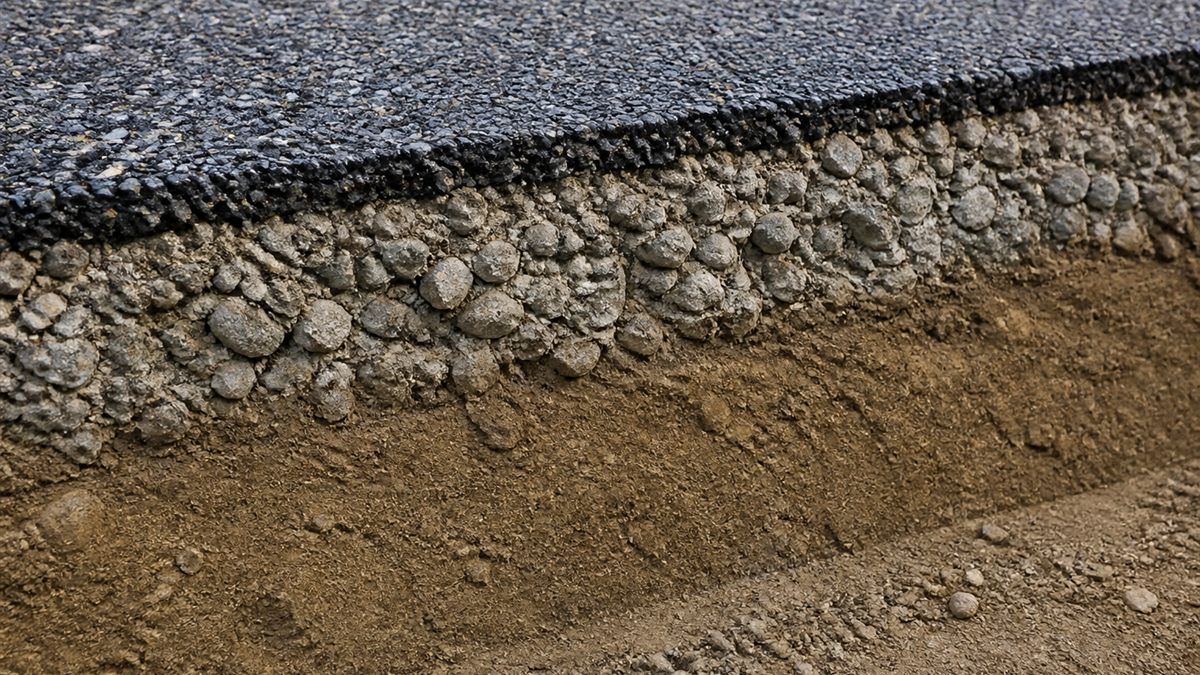
Bitumen is the black petroleum-based binder, not the complete driveway structure. Depending on its grade and temperature, it may behave as a highly viscous material or semi-solid.
A sprayed-seal driveway usually includes three functional parts:
-
Subgrade: the soil or natural ground supporting the driveway.
-
Compacted road base: graded crushed stone that spreads vehicle loads and creates a firm profile.
-
Sprayed seal: bitumen binder covered with selected aggregate chips.
The base carries most of the structural demand. The seal binds the surface stone, reduces dust and helps limit water infiltration from above. If the subgrade moves or the road base is too thin, wet or poorly compacted, the surface may crack, rut or develop potholes.
This is why spraying binder over an untreated gravel driveway does not automatically create a durable result. The contractor must first determine whether the existing material has suitable grading, depth, compaction, shape and drainage.
Why It Can Be Cost Effective for Long Driveways
Cost efficiency is one of the strongest reasons rural owners consider a bitumen spray seal. The process can cover a large area without requiring the same volume of plant-mixed material used in asphalt concrete or the forming and curing associated with a concrete slab.
The initial price still varies widely. Important factors include:
-
Total area and driveway length
-
Existing base condition
-
Required excavation or additional road base
-
Site access for trucks and rollers
-
Drainage and culvert work
-
Binder type and application rate
-
Aggregate size, quality and local availability
-
Single-coat or double-coat design
-
Distance from material suppliers
-
Traffic-control requirements
-
Local labor and equipment costs
A lower square-meter price may exclude base repairs, drainage or sweeping. It may also describe one seal coat when another contractor has quoted a two-coat system. A meaningful comparison requires matching scopes, not just comparing the totals at the bottom of the quotations.
The most affordable surface is not always the option with the lowest initial bill. Lifecycle value includes routine care, localized repairs, resealing, expected traffic and the cost of correcting base failure.
A Cleaner Alternative to Loose Gravel
Gravel can be economical, but regular vehicle movement can create dust in dry weather, mud during rain, corrugations, displaced stone and wheel ruts. Owners may need to grade the surface and replace lost material periodically.
A bitumen sealed driveway binds its cover aggregate more securely than loose gravel. This can reduce:
-
Dust reaching homes, sheds and parked vehicles
-
Mud being tracked onto nearby roads or floors
-
Loose stone migrating into lawns and drains
-
Washboarding from repeated vehicle movement
-
Routine grading of the finished surface
It will not eliminate every loose chip. Some excess aggregate may remain after construction and should be swept according to the project requirements. Continued stone loss, bare binder or rapidly widening patches can indicate inadequate embedment, incorrect binder application, unsuitable aggregate or another installation problem.
Dust may also continue along unsealed shoulders and connecting roads. The seal controls its own treated area rather than changing the entire surrounding environment.
Surface Protection Against Rainfall
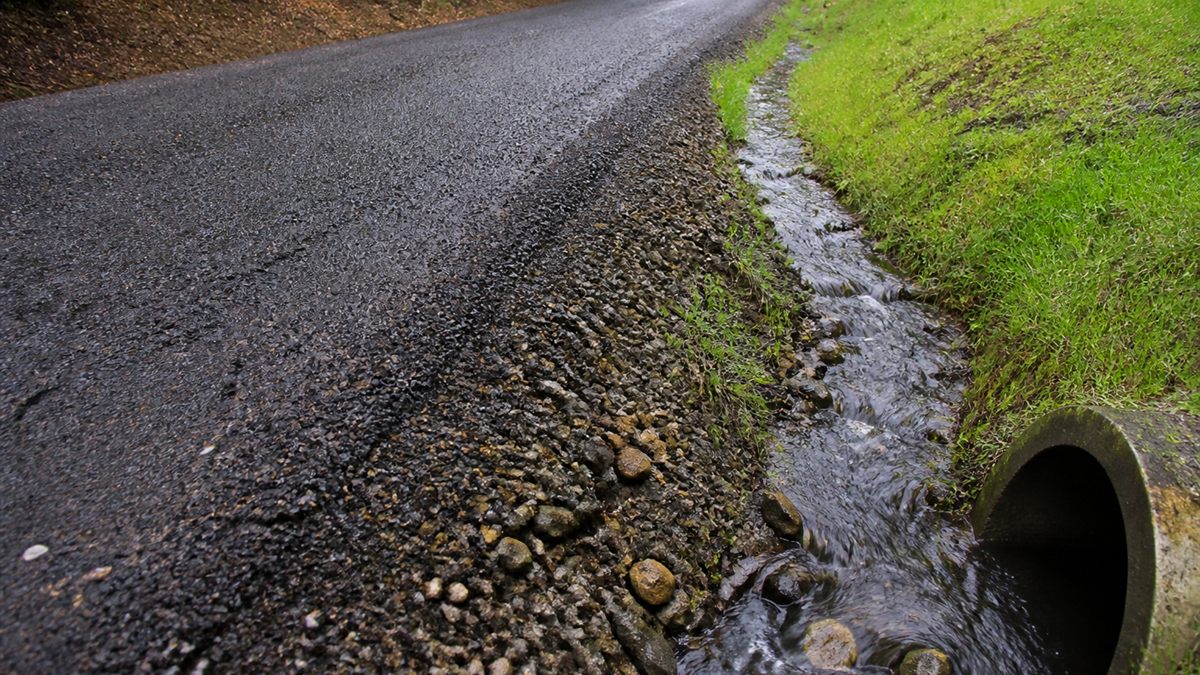
Bitumen is valued for its resistance to water. A well-constructed sprayed seal limits the amount of rainfall entering the road base through the top surface.
That protection matters because saturated base material can lose strength. Under vehicle loads, a weakened base may deform, pump fine material, crack the seal or form potholes.
Surface sealing is only one part of water management. A driveway also needs:
-
Adequate longitudinal slope
-
Crossfall that directs water off the surface
-
Clear table drains or edge drainage
-
Culverts where runoff crosses the alignment
-
Stable shoulders
-
Protection against erosion
-
No low points that trap standing water
Water can enter from the sides, rise from below or collect behind blocked drainage. A new bitumen layer cannot correct those conditions by itself. Base and drainage work should be treated as part of the driveway, not optional extras.
Efficient Installation With Less Disruption
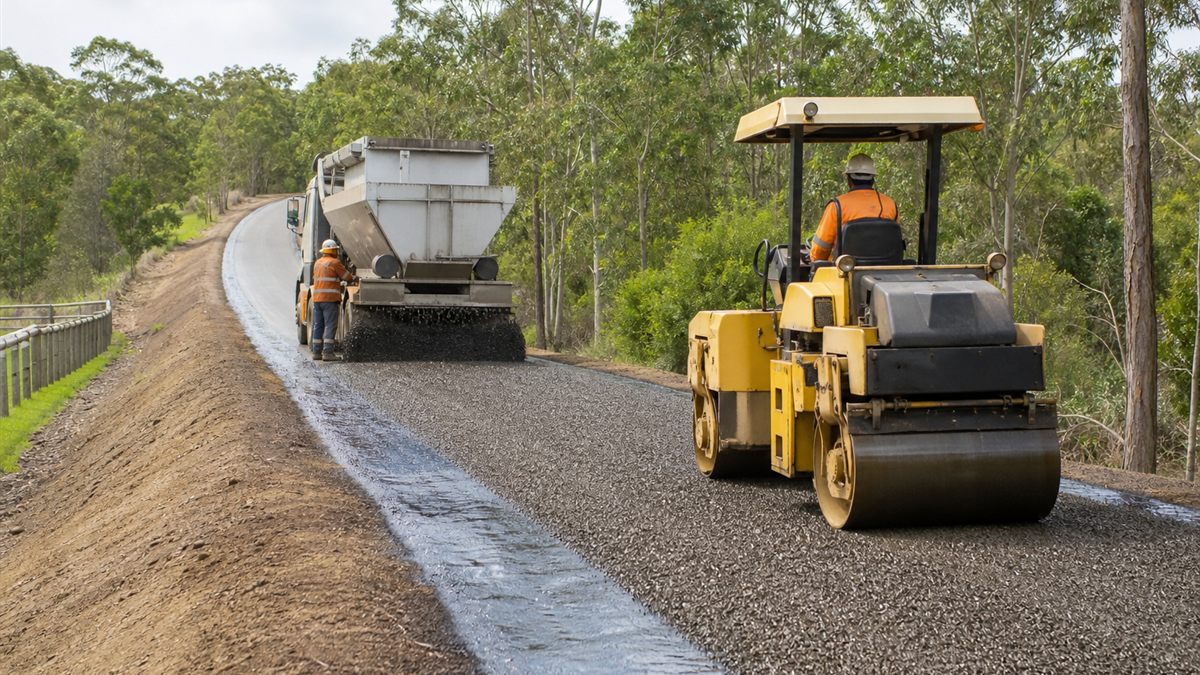
A sprayed seal can often be applied efficiently over long distances. The process generally involves preparing and compacting the base, distributing binder, spreading aggregate, rolling the chips and removing unsuitable excess stone.
This can mean less disruption than some thicker pavement options, particularly on large rural sites. The actual reopening time depends on the binder, weather, aggregate embedment, traffic management and contractor instructions.
Owners should not assume the surface is ready for unrestricted use as soon as the machinery leaves. Early traffic may need controlled speed and limited sharp turning. Fast acceleration, aggressive steering or heavy braking can displace aggregate before the seal has stabilized.
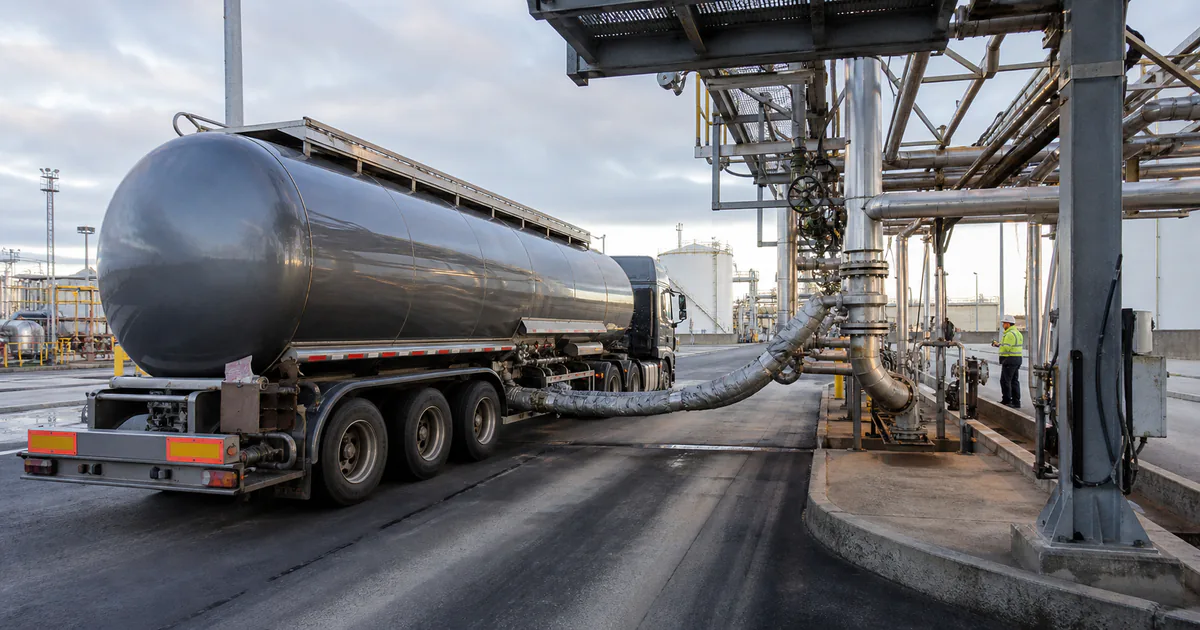
Spraying heated or specialized binder requires trained operators and suitable equipment. It is not a safe DIY driveway process. Professional controls are needed for worker exposure, traffic, equipment, temperature and environmental conditions.
Traction and a Natural Stone Appearance
The exposed aggregate gives a sprayed bitumen driveway a textured finish. Suitable stone can provide useful tire grip, particularly when compared with polished, muddy or loose surfaces.
Traction depends on more than roughness. Aggregate shape, resistance to polishing, chip size, binder level, drainage, contamination and wear all influence skid performance. Excess binder can rise around the stone and reduce texture, a condition often called bleeding or flushing.
The finish can suit rural and landscaped properties because the aggregate determines much of the final color. Locally available stone may produce gray, brown, red or mixed tones. As the surface ages, its appearance may become more influenced by the aggregate and less uniformly black.
The tradeoff is a coarser texture than hot-mix asphalt. Tire noise can be higher, and the surface may be less comfortable for small wheels, bicycles, skateboards, workshop trolleys or mobility devices. These details matter when selecting a surface for a home rather than a rural access road.
Flexibility and Repair Options
A sprayed bitumen seal can tolerate limited movement without behaving like a rigid concrete slab. This does not make it immune to cracks. Seasonal soil movement, tree roots, weak edges, poor compaction and overloaded areas can still damage it.
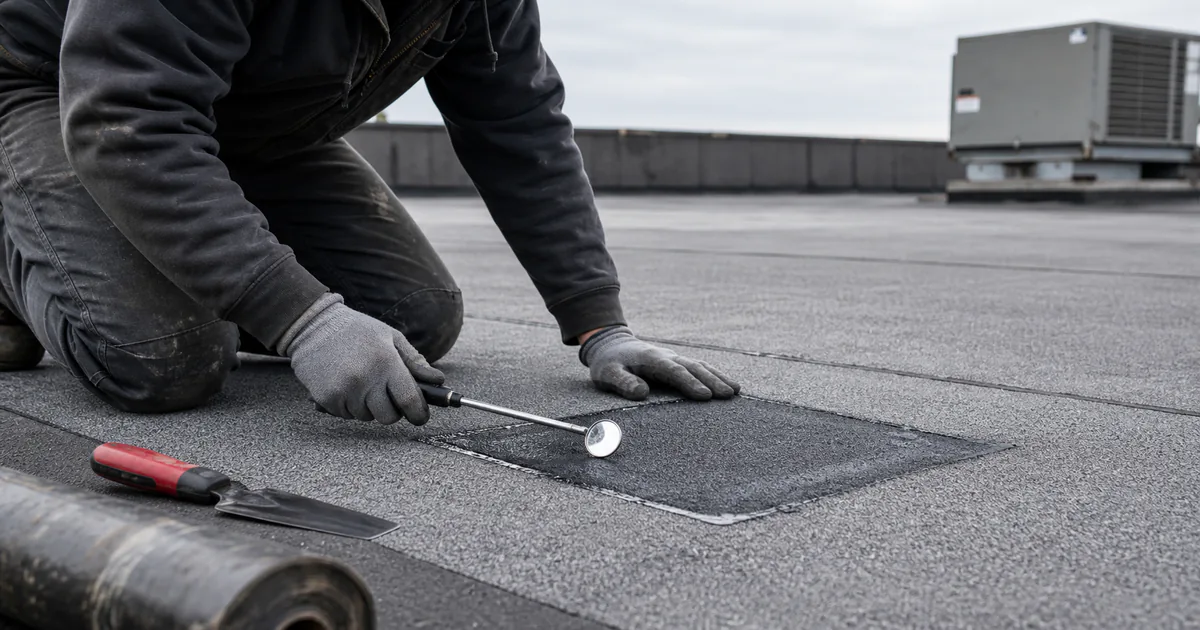
Localized wear may be treated through crack sealing, patching, resealing or replacement of damaged sections. The appropriate repair depends on what has failed.
Surface repairs may work when the base remains sound. Repeatedly patching the following problems is unlikely to provide a lasting solution:
-
Deep wheel ruts
-
Soft or pumping areas
-
Large depressions
-
Failed culvert approaches
-
Widespread edge collapse
-
Persistent potholes in the same location
-
Cracks caused by major ground movement
These symptoms call for investigation of the base, subgrade or drainage. Covering them with more binder may briefly hide the damage while moisture and deformation continue underneath.
Single-Coat and Double-Coat Seals
A single-coat seal generally uses one binder application and one layer of aggregate. It may suit certain light-duty driveways, surface renewals or projects designed specifically for that treatment.
A double-coat seal uses two coordinated binder and aggregate applications. The second layer can fill spaces within the first and create a more substantial surface. It may be selected for greater traffic demand, improved coverage or other design reasons.
Double coat does not automatically mean twice the life, nor is a single coat automatically inadequate. Selection depends on the base, stone sizes, traffic, climate, existing surface and local practice.
The quotation should state the number of coats, aggregate sizes and binder specification. A vague promise to “bitumen the driveway” does not provide enough information to judge the proposed work.
Tradeoffs to Consider Before Choosing Bitumen
A balanced review of bitumen driveway pros and cons must include the drawbacks.
Loose stone
New sprayed seals may contain loose aggregate. Suitable sweeping and controlled early use help manage it. Ongoing chip loss is not simply a normal feature if the surface is becoming bare.
Rougher and noisier finish
The exposed chips produce more texture and may create more tire noise than dense asphalt. The surface can also feel less refined in a formal residential setting.
Heat and tire pickup
Dark surfaces absorb heat. In very hot conditions, an unsuitable or distressed binder may soften enough to stick to tires or move upward between aggregate particles. Parked heavy loads and tight steering can worsen marking.
Maintenance needs
The binder ages through oxidation and weather exposure. Cracks, chip loss, edge damage and drainage problems require timely attention. Resealing may eventually be needed, but the timing cannot be determined from age alone.
Limited tolerance for concentrated stress
Heavy vehicles moving straight through may be manageable when the base is designed for them. Repeated tight turns, stationary loads, equipment stands and delivery-truck maneuvers can be more demanding. Traffic type matters as much as vehicle weight.
Bitumen Versus Asphalt, Concrete and Gravel
| Driveway type | General character | Often suitable for |
|---|---|---|
| Sprayed bitumen or chip seal | Textured stone surface bonded with sprayed binder | Long rural driveways and low-to-moderate traffic |
| Asphalt concrete | Smooth, dense, plant-mixed and compacted pavement | Urban properties, frequent traffic and parking areas |
| Concrete | Rigid slab with several finish options | Sites prioritizing a firm surface and defined appearance |
| Gravel | Loose granular surface with low initial material cost | Access roads where dust, mud and grading are acceptable |
Asphalt may provide a quieter and smoother surface than a sprayed seal. It can also suit areas with frequent turning or pedestrian use. Its installed cost may be higher, especially where an asphalt plant is far from the project.
Concrete provides a firm surface and more decorative choices, but repairs may remain visible. Soil movement, joints, curing and base preparation need consideration.
Gravel has a low barrier to entry and can be replenished with simple equipment. It brings more dust, migration, weeds, ruts and grading work.
No material is universally best. Driveway length, slope, vehicle use, appearance, climate, contractor availability and budget should guide the selection.
Bitumen Driveway Maintenance
A simple maintenance program can catch small problems before they spread.
Regular checks should cover:
-
Drains, culverts and runoff paths
-
Edges and shoulders
-
Cracks and open patches
-
Loose or missing aggregate
-
Bleeding or shiny binder-rich areas
-
Depressions and wheel tracks
-
Potholes
-
Vegetation growing through the surface
-
Damage after storms or construction traffic
Keep water moving away from the driveway and remove debris from drainage paths. Control vegetation near the edges without undermining the shoulders. Repair eroded areas before traffic breaks the unsupported seal.
Avoid placing incompatible solvents or unapproved coatings on the surface. Fuel, oil and some chemicals may soften or damage bituminous material. Ask a qualified contractor to identify the existing treatment before selecting a repair product.
Bitumen driveway lifespan cannot be reduced to one guaranteed number. Base quality, traffic, drainage, binder aging, UV exposure, climate, maintenance and workmanship can create major differences between two surfaces of the same age.
What a Detailed Contractor Quote Should Include
A written quote should define the proposed pavement rather than use broad terms such as “seal driveway.”
Request details covering:
-
Measured driveway area
-
Excavation and disposal
-
Subgrade repairs
-
Road-base type and depth
-
Compaction method
-
Drainage, crossfall and culverts
-
Binder type and application rate
-
Aggregate source, size and color
-
Single- or double-coat design
-
Rolling and embedment
-
Excess-chip sweeping
-
Traffic restrictions after installation
-
Edge treatment
-
Warranty and maintenance requirements
-
Exclusions and concealed-condition rates
Ask whether permits or local authority requirements apply near the road entrance. Confirm how unexpected soft spots or wet areas will be handled.
Be cautious with unsolicited contractors claiming to have cheap “leftover bitumen” from another job. High-pressure offers, immediate payment demands, unclear company details and missing written specifications are warning signs. Verify licensing where applicable, check insurance and obtain comparable quotes.
Frequently Asked Questions
Is a bitumen driveway better than gravel?
It can provide better dust, mud and stone control than loose gravel. It also reduces the need for routine grading. Gravel may have a lower initial cost and be easier to replenish, so the better choice depends on driveway length, drainage, traffic and maintenance expectations.
Is bitumen good for a long rural driveway?
Yes, a sprayed bitumen seal can be cost effective over a large rural area. It is most suitable when the base is stable, drainage is effective and traffic matches the design. A weak gravel foundation must be corrected before sealing.
How long does a bitumen driveway last?
There is no reliable universal lifespan. Performance varies with base strength, drainage, climate, traffic, binder and aggregate selection, number of coats, installation quality and maintenance. An on-site assessment provides more useful guidance than a fixed online estimate.
Why are stones loose after bitumen sealing?
Some excess aggregate may remain during early service and should be managed through suitable traffic control and sweeping. Continued heavy chip loss can indicate poor embedment, inadequate binder, contamination, unsuitable stone or premature traffic.
Can bitumen be sprayed directly over gravel?
Only if the existing driveway has been assessed, reshaped and prepared as a suitable base. Loose, dusty, wet or poorly graded gravel will not provide reliable support. Additional road base, moisture conditioning and compaction may be necessary.
Does a bitumen driveway need drainage?
Yes. The seal helps resist surface water, but runoff still needs somewhere to go. Crossfall, drains, culverts, stable shoulders and erosion control protect the base. Standing water or groundwater can damage the driveway from below or at its edges.
Can a bitumen driveway handle heavy vehicles?
It can when the subgrade and road base are designed for the expected loads. Heavy parked vehicles, tight turning, braking and repeated delivery traffic create greater stress than occasional straight-through movement. These uses should be disclosed during design.
Is a double-coat seal always better?
No. A double coat can offer greater coverage and a more substantial surface, but suitability depends on the base, traffic, climate, aggregate and project specification. Paying for an additional coat does not correct poor drainage or structural weakness.
Deciding Whether the Benefits Match Your Property
The most valuable bitumen driveway benefits are affordability over long distances, reduced gravel dust, improved wet-weather access, useful traction and efficient construction. Those advantages depend on the parts that cannot be seen easily, particularly the subgrade, road base, compaction and drainage.
Before accepting a quote, confirm exactly what the contractor means by a bitumen driveway. Review the proposed base work, seal design, aggregate, traffic limits and future maintenance. A correctly specified sprayed seal can be a practical rural surface, but a cheap coating over a failed foundation is unlikely to provide lasting value.

About the author
Misbah Shafique
Misbah Shafique writes practical guides on bitumen and asphalt quantities, paving calculations, material estimates, and project planning. Her work helps readers understand the numbers behind road, driveway, and construction jobs.
Plan your next project
Estimate bitumen before you order.
Use the calculator to turn your area and thickness into a practical material estimate.