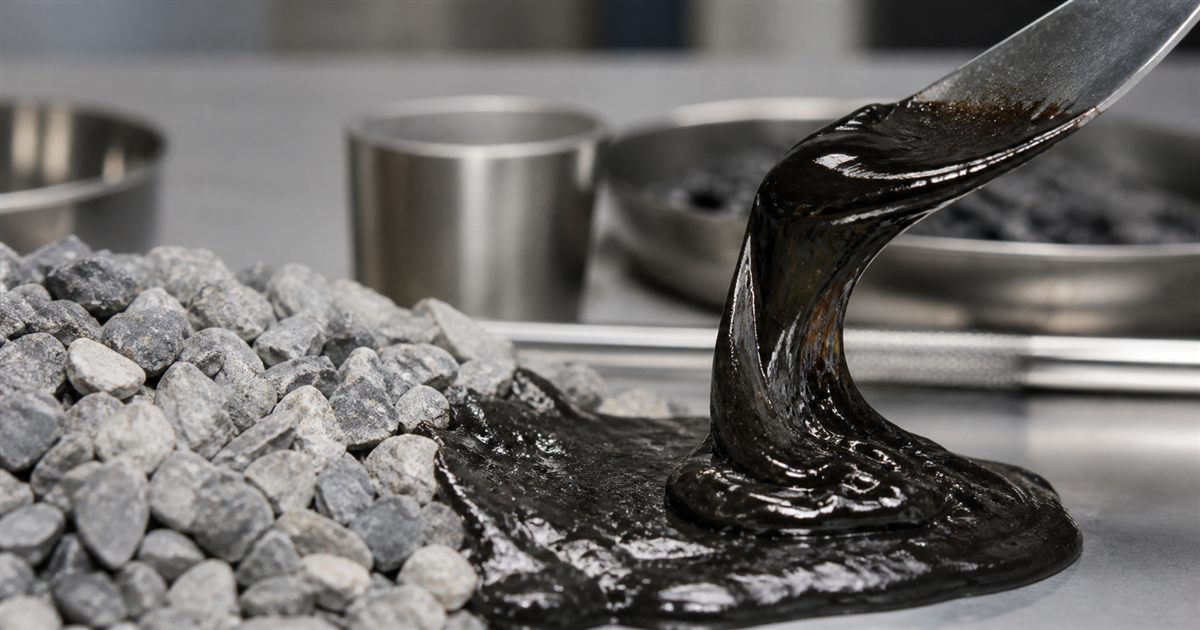
The main difference between asphalt vs bitumen is that bitumen is the petroleum-based binder, while asphalt is usually the engineered paving mixture made from bitumen, crushed stone, sand, and mineral filler. In the United States, however, “asphalt” can also mean the binder itself, which causes much of the confusion.
Think of bitumen and asphalt in the same way you might think of cement and concrete. Cement binds the ingredients in concrete; bitumen binds the mineral aggregate in asphalt. The comparison becomes less clear when people use “bitumen road” to mean a sprayed stone-chip seal rather than bitumen by itself.
This article separates the materials from the pavement systems. It explains regional vocabulary, composition, production, road performance, installation, maintenance, cost variables, and where each term should be used.
Quick Answer
Bitumen is a highly viscous or semi-solid hydrocarbon binder obtained from suitable crude oils or natural deposits. Asphalt mixture is a manufactured combination of graded aggregate, filler, and a controlled amount of bitumen. American English may call the binder “asphalt cement,” while international engineering usage usually reserves “asphalt” for the complete mixture.
Why the Terminology Changes by Country
Before comparing the materials, it helps to identify what “asphalt” means in the country or industry being discussed.
| Region | Common meaning of bitumen | Common meaning of asphalt |
|---|---|---|
| United States | Less common name for asphalt binder; also used for natural or oil-sands material | May mean either asphalt binder or the complete paving mixture |
| United Kingdom and much of Europe | Petroleum binder used in asphalt and waterproofing | Mixture of aggregate, filler, and bitumen |
| Australia and New Zealand | Binder; “bitumen road” often means a sprayed seal | Dense, plant-produced and compacted paving mixture |
| Canada | May refer to very heavy oil-sands petroleum | Commonly used for paving binder or the finished pavement |
| South Asia and the Middle East | Binder used in roads, roofing, and waterproofing | Generally the prepared aggregate-and-binder mixture |
In American road engineering, asphalt binder or asphalt cement often means the same type of paving material that another country calls bitumen. The completed pavement mixture may be called asphalt, hot-mix asphalt, blacktop, or asphalt concrete.
This creates two possible comparisons:
-
Bitumen versus asphalt as binder versus mixture.
-
Asphalt concrete versus a sprayed bitumen seal as two road-surfacing systems.
These are related questions, but they do not have the same answer.
Difference Between Asphalt vs Bitumen at a Glance
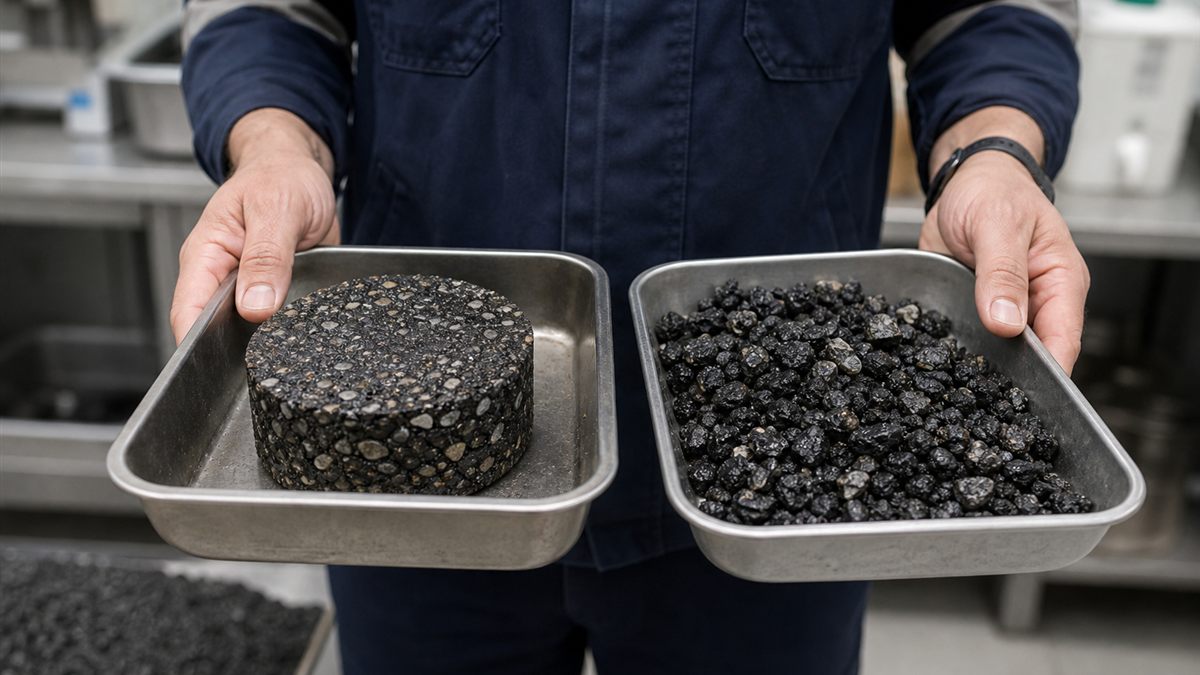
| Feature | Bitumen | Asphalt mixture |
|---|---|---|
| Material type | Petroleum-based or naturally occurring binder | Engineered composite pavement material |
| Composition | Complex mixture of heavy hydrocarbons | Graded aggregate, filler, bitumen, air voids and optional additives |
| Main role | Coats, bonds, seals and resists water | Forms a compacted pavement layer |
| Production | Refined, blended, modified or obtained from natural deposits | Manufactured in an asphalt plant or prepared as a cold mixture |
| Physical form | Highly viscous or semi-solid, depending on grade and temperature | Dense granular mixture before compaction; solid pavement after placement |
| Structural function | Supplies binding and waterproofing properties | Distributes traffic loads as part of a designed pavement |
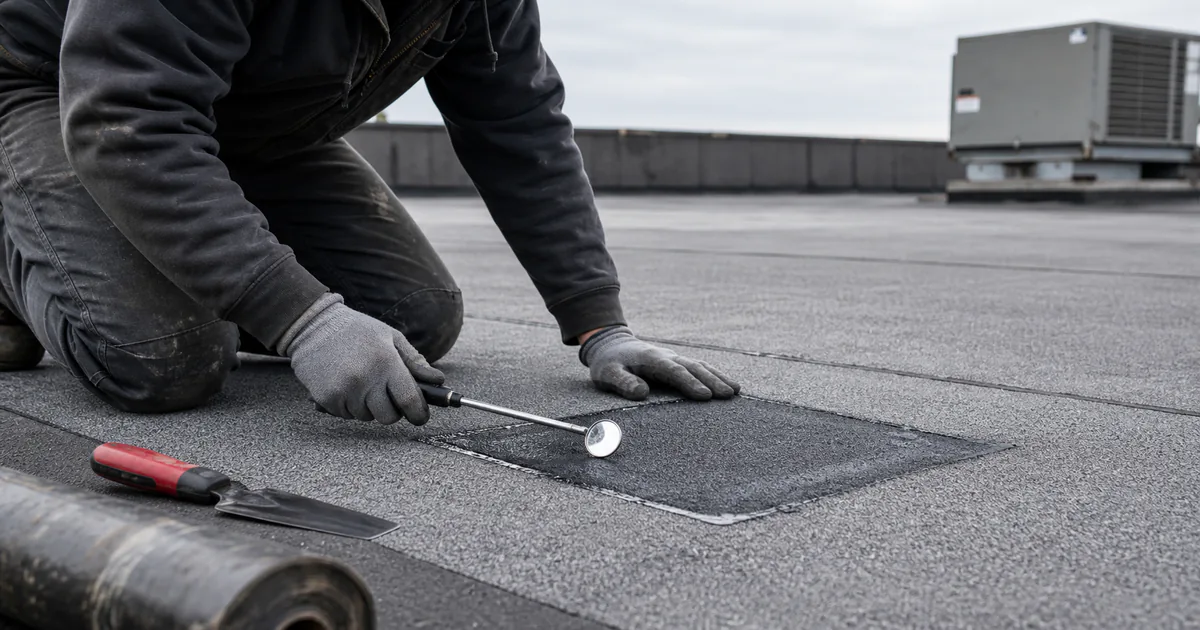
| Installation | Used in asphalt mixes, emulsions, seals, coatings and membranes | Laid with paving equipment and compacted |
| Common uses | Paving binder, sprayed seals, roofing and waterproofing | Roads, parking lots, driveways, runways and paths |
| US terminology | Often called asphalt binder or asphalt cement | Asphalt, blacktop or asphalt concrete |
Bitumen alone is not normally placed as a thick structural road layer. It needs aggregate or another reinforcing system for most construction applications.
Composition: Binder Versus Engineered Mixture
Bitumen is a complex hydrocarbon material rather than one pure chemical. Its exact composition depends on the crude-oil source, refining process, grade, and modification. At ordinary temperatures, it may appear semi-solid or extremely thick. Heating lowers its viscosity and allows it to coat aggregate more efficiently.
Its useful pavement properties include:
-
Adhesion to suitable mineral aggregate
-
Cohesion within the binder
-
Resistance to water penetration
-
Flexibility under controlled conditions
-
Temperature-dependent flow
-
Ability to be modified for different performance needs
Asphalt composition is more complex because asphalt is a designed mixture. It usually contains coarse aggregate, fine aggregate, mineral filler, bitumen, and a controlled amount of air voids after compaction. Reclaimed asphalt, polymers, fibers, anti-stripping agents, or other additives may also be included.
Mineral aggregate forms most of the mixture by mass. A typical paving mixture may contain roughly five percent binder, but this is only an illustrative figure. The correct amount varies with aggregate gradation, absorption, mixture type, traffic, climate, and local specifications.
Too little binder can contribute to a dry mixture, weak coating, raveling, and reduced durability. Too much can reduce stability or increase deformation and bleeding risks. The mixture must balance binder content, aggregate structure, and air voids rather than maximize one ingredient.
How Each Material Is Produced
Bitumen production
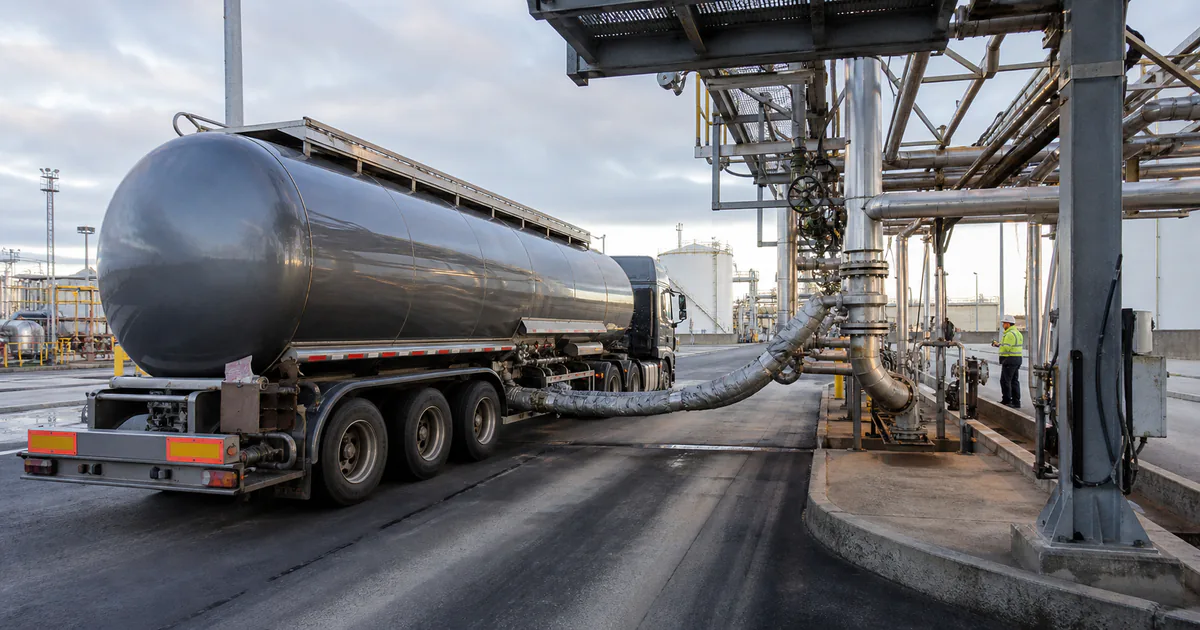
Refineries obtain paving bitumen from suitable crude oils. Atmospheric distillation removes lighter components, and vacuum distillation separates additional fractions at reduced pressure. A heavy residue remains.
That material may already approach the required grade or may need controlled blending, modification, or further processing. Not every crude oil produces the same binder, and the refinery product must meet the relevant penetration, viscosity, or performance specification.
Bitumen can also occur naturally in oil sands, rocks, seeps, and pitch lakes. Natural material may require extraction and processing before it becomes suitable for construction.
Asphalt manufacture
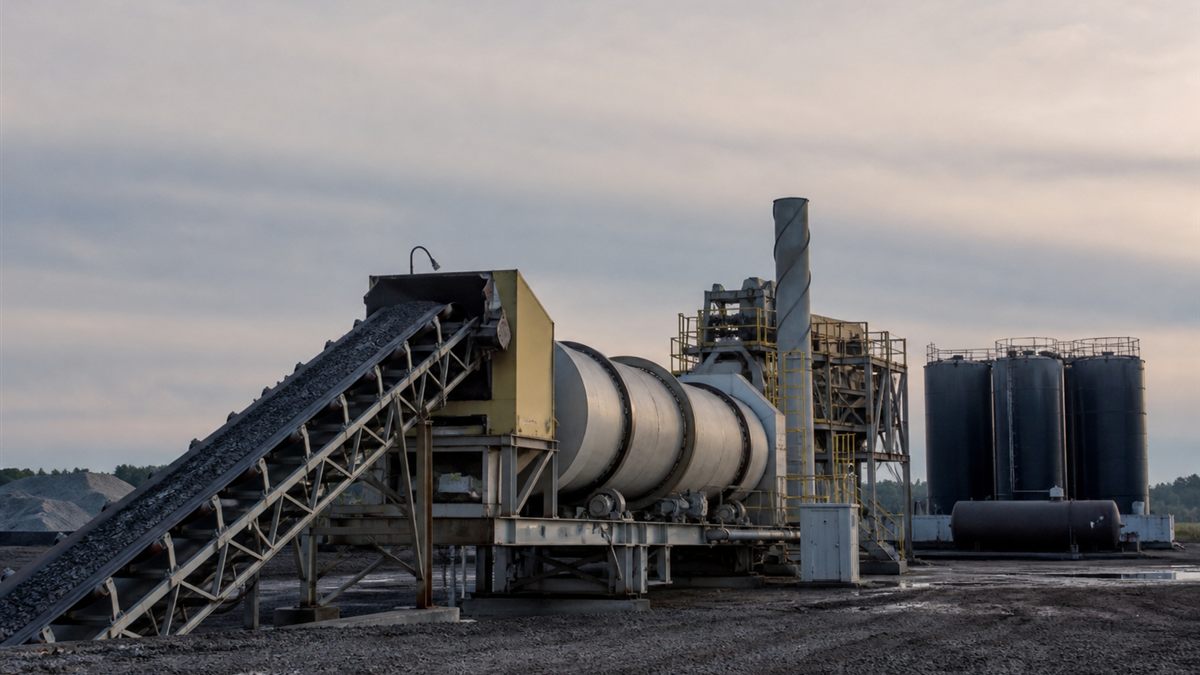
An asphalt mixing plant prepares the finished paving material. The plant controls aggregate grading, moisture, temperature, binder dosage, filler, and any additives.
For hot-mix asphalt, the aggregate is heated and dried before being coated with hot binder. Warm-mix technologies allow production and compaction at lower temperatures than conventional hot mix through changes in process or additives. Cold mixes may use emulsified or otherwise workable binders for selected applications.
The prepared mixture is transported to the project while it remains workable. An asphalt paver distributes it to the required width and thickness, and rollers compact it to achieve density and a suitable air-void structure.
Good plant production cannot compensate for a failed base, poor drainage, unsuitable weather, inadequate compaction, or incorrect pavement design.
Asphalt Pavement and Sprayed Bitumen Seal Are Different Systems
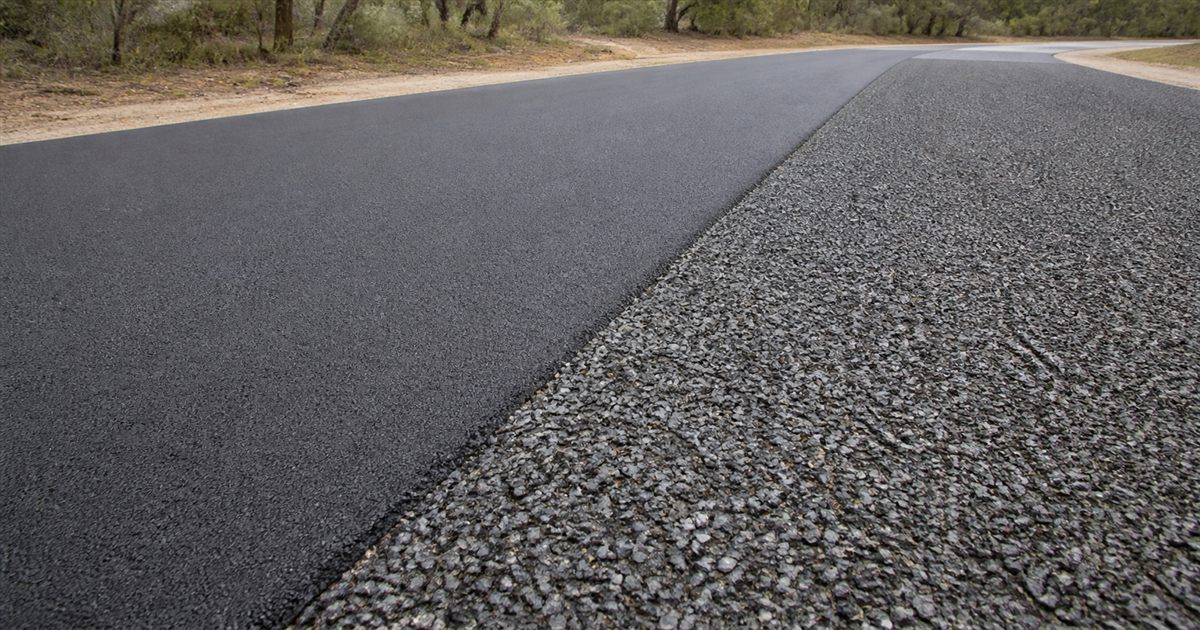
Many online comparisons describe asphalt as thick and smooth while calling a thin, stone-covered surface “bitumen.” Technically, that comparison is between asphalt concrete and a sprayed bitumen seal, not between asphalt and raw bitumen.
| Surface system | Basic construction | Typical characteristics |
|---|---|---|
| Asphalt concrete | Graded aggregate mixed with bitumen, placed and compacted | Dense, comparatively smooth surface for varied traffic |
| Sprayed bitumen seal | Binder sprayed over a prepared base and covered with stone chips | Coarser, economical surface treatment |
| Bitumen emulsion treatment | Water-based binder dispersion used as a coat or with aggregate | Useful for maintenance and selected lower-temperature work |
| Unsealed granular road | Compacted gravel or crushed stone without a bound surface | More dust and regular surface maintenance |
In a sprayed seal, the binder bonds the stone chips to the prepared surface. The underlying pavement base carries much of the structural demand. One or more spray-and-chip applications may be used depending on the design.
Asphalt concrete contains aggregate and binder mixed together before placement. Compaction creates an interlocked, bound layer with controlled density and air voids.
Both systems still require a suitable foundation. Applying asphalt or a sprayed seal over unstable, wet, poorly drained, or inadequately compacted material will not produce a durable pavement.
Comparing Surface Texture, Noise and Ride Quality
Dense asphalt generally produces a smoother surface than a coarse sprayed seal, which can improve ride comfort and reduce loose stone when correctly constructed. Its texture can suit urban streets, parking areas, driveways, cycle routes, and locations where a uniform finish matters.
A sprayed seal has exposed stone chips. The texture can provide useful skid resistance, but it may produce more tire noise and a rougher ride. Loose aggregate can be present during early service or if construction, traffic control, or binder application is inadequate.
Neither system has one fixed texture. Asphalt can be designed as dense graded, gap graded, open graded, stone mastic, or another specialized mixture. A sprayed seal can use different stone sizes, binder rates, and treatment configurations.
Skid resistance depends on aggregate polish resistance, surface texture, drainage, traffic, wear, contamination, and construction—not merely on whether the surface is called asphalt or bitumen.
Strength, Durability and Weather Performance
It is misleading to claim that asphalt always lasts longer than “bitumen.” Bitumen is a component, while asphalt is a pavement mixture. Even when comparing asphalt concrete with a sprayed seal, service life depends on the entire pavement.
Important variables include:
-
Traffic volume and axle loading
-
Subgrade and base strength
-
Pavement thickness
-
Drainage
-
Aggregate properties
-
Binder grade
-
Mix or seal design
-
Compaction and construction quality
-
Temperature range
-
Water exposure
-
Timely maintenance
Asphalt concrete can provide a robust surface for heavy, turning, braking, or concentrated traffic when the pavement structure is designed accordingly. Sprayed seals may be practical on rural and lower-volume roads where budgets must cover long distances.
High temperatures can soften the binder and increase rutting or bleeding risks if the grade and mixture are unsuitable. Cold conditions can increase stiffness and cracking risk. Repeated wheel loads may cause fatigue cracking, while water can weaken the aggregate–binder bond and underlying layers.
A thicker surface is not automatically stronger if it is poorly compacted or placed over an inadequate base. Likewise, a thin sprayed seal may perform well when used for the traffic and pavement conditions for which it was designed.
Cost: Why the Cheapest Surface Is Not Always the Lowest-Cost Choice
A sprayed bitumen seal often requires less plant-produced material than asphalt concrete, which can make it economical for large rural networks. Asphalt paving may involve more processing, transport, equipment, labor, and compacted material.
That does not establish a universal price difference. Installed cost depends on:
-
Project area and shape
-
Distance from the asphalt plant or material source
-
Required pavement thickness
-
Base preparation and excavation
-
Drainage work
-
Local aggregate and binder prices
-
Access for paving machinery
-
Traffic-control requirements
-
Number of seal applications or asphalt courses
-
Repairs to an existing pavement
-
Expected maintenance
-
Contractor availability
Lifecycle cost matters more than the opening quote. A low-cost surface can become expensive if it requires frequent repairs under unsuitable traffic. A more substantial asphalt pavement may also waste money when a well-designed sprayed seal would meet the project’s needs.
Quotes should describe the base, drainage, binder or mixture specification, layer thickness, compaction, surface treatment, and exclusions. Comparing only the cost per square foot or square meter can hide major differences in scope.
Maintenance and Repair Differences
Asphalt maintenance commonly includes crack sealing, localized patching, pothole repair, surface treatments, milling, and resurfacing. The correct method depends on whether the damage is limited to the surface or extends into the base and subgrade.
Sprayed seals may need resealing as the binder ages, chips are lost, or the surface becomes permeable. Localized repairs can address failures, but widespread deformation may point to a structural problem beneath the seal.
Bitumen itself ages through oxidation and other physical and chemical changes. As it becomes stiffer, the pavement or seal may lose flexibility. Ultraviolet exposure, heat, air, and time all influence this process.
Maintenance should address causes, not just symptoms. Repeatedly filling a pothole will not solve poor drainage, weak base material, utility-trench settlement, or heavy loading beyond the pavement design.
Which Is Better for Roads and Driveways?
There is no universal winner because the practical choice is usually between pavement systems, not asphalt and bitumen as isolated materials.
Asphalt concrete may be appropriate when a project needs:
-
A smooth, dense surface
-
Regular heavy traffic
-
Frequent turning or braking
-
Clear line marking
-
A more uniform appearance
-
A designed structural pavement layer
A sprayed bitumen seal may suit:
-
Long rural roads
-
Lower traffic volumes
-
Projects with limited initial budgets
-
Existing bases suitable for surface sealing
-
Locations where a textured stone-chip finish is acceptable
For a residential driveway, vehicle weight, turning movement, slope, drainage, appearance, local climate, and base condition should guide the choice. A qualified paving contractor or pavement designer should assess more than the proposed top surface.
Asphalt, Bitumen, Tar, Tarmac and Blacktop
Coal tar is produced from coal processing and is chemically different from petroleum bitumen. Modern asphalt roads generally use petroleum-based binders, not coal tar.
Tarmac originally referred to a road material associated with tar-coated aggregate. The name is now used informally in some places for almost any black paved surface, even when the actual material is asphalt.
Blacktop is a common North American term for asphalt pavement, especially driveways, small roads, and parking areas. It does not identify a separate basic material category.
Asphalt cement normally means paving binder in American technical usage. Asphalt concrete means aggregate bound with asphalt cement. Keeping those two expressions separate makes US specifications easier to interpret.
Recycling Asphalt and Recovering Binder Value
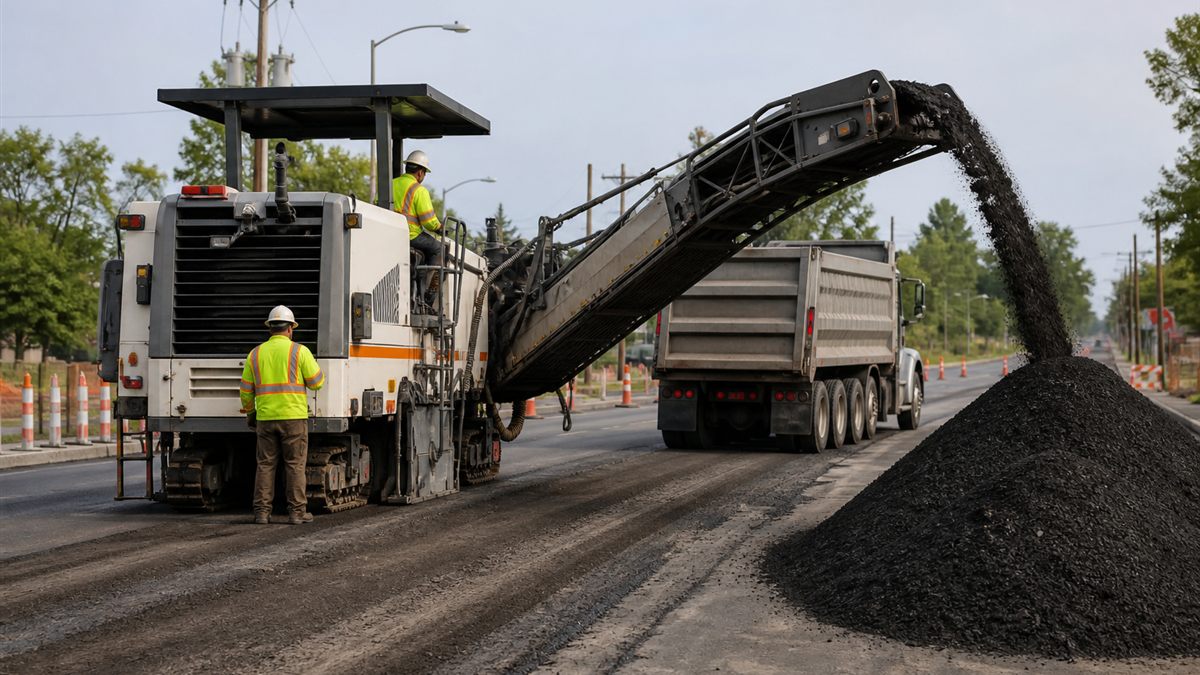
Reclaimed asphalt pavement, or RAP, is produced when an existing asphalt surface is milled or removed. It contains both mineral aggregate and aged binder.
A plant can process RAP and incorporate a controlled amount into new asphalt. Designers account for aggregate grading, old binder content, moisture, stiffness, contamination, and the performance required from the new mixture.
The aged bitumen is not automatically restored to its original condition. Virgin binder, a different binder grade, recycling agents, or mixture adjustments may be required. Repeated recycling must remain subject to testing and design rather than being treated as performance-neutral.
Sprayed-seal materials may also be recovered when pavement layers are removed, although reuse depends on how the material is processed and what new mixture or application is planned.
Frequently Asked Questions
Are asphalt and bitumen the same material?
Not in the clearest international engineering usage. Bitumen is the binder, while asphalt is the mixture of binder, aggregate, and filler. In American English, however, “asphalt” may also refer to the binder, so the intended meaning depends on context.
Is bitumen an ingredient in asphalt?
Yes. Petroleum bitumen is the most common binder used to coat and hold the aggregate in conventional asphalt mixtures. Asphalt also contains coarse and fine aggregate, mineral filler, controlled air voids, and sometimes recycled material or performance additives.
Why do Americans call bitumen asphalt?
American technical language commonly uses “asphalt binder” or “asphalt cement” for the petroleum binder. The word asphalt also describes the complete paving mixture. “Asphalt concrete” is the clearer term when the full aggregate-and-binder composite must be distinguished.
What is the difference between an asphalt road and a bitumen road?
An asphalt road usually has a compacted layer of plant-mixed asphalt concrete. In Australia and similar markets, a “bitumen road” often means a sprayed seal made by applying binder and stone chips over a prepared base. Bitumen by itself is not the complete structural road.
Is asphalt always more durable than a sprayed bitumen seal?
No. Asphalt concrete can suit demanding traffic, but durability depends on design, thickness, base strength, drainage, materials, climate, compaction, and maintenance. A correctly designed sprayed seal may provide effective service on rural or lower-volume roads.
Which costs more: asphalt or bitumen surfacing?
Asphalt concrete often has a higher initial installed cost than a basic sprayed seal, but this is not universal. Project size, base repairs, transport distance, local materials, layer design, access, traffic control, and long-term maintenance can reverse or narrow the difference.
Is tarmac the same as asphalt?
Not technically. Tarmac historically involved tar-bound aggregate, while modern asphalt uses petroleum-based binder. In everyday British speech, “tarmac” is often used loosely for an asphalt or other dark road surface, even when no coal tar is present.
Can old asphalt be recycled?
Yes. Milled asphalt can be processed as reclaimed asphalt pavement and used in new mixtures. Its aggregate and aged binder retain value, but the recycled material must be tested and proportioned. Additional binder or recycling agents may be needed to meet performance requirements.
Choosing the Correct Term and Surface
Understanding the difference between asphalt vs bitumen begins with separating an ingredient from a finished composite. Bitumen provides the adhesive and water-resistant binder. Asphalt combines that binder with a designed aggregate structure to create a compacted paving layer.
If “bitumen road” is being offered as an alternative, ask whether the contractor means asphalt concrete, a sprayed stone-chip seal, an emulsion treatment, or something else. Once the proposed pavement system is clear, traffic, drainage, base preparation, lifecycle cost, and maintenance not terminology alone should determine the suitable choice.

About the author
Misbah Shafique
Misbah Shafique writes practical guides on bitumen and asphalt quantities, paving calculations, material estimates, and project planning. Her work helps readers understand the numbers behind road, driveway, and construction jobs.
Plan your next project
Estimate bitumen before you order.
Use the calculator to turn your area and thickness into a practical material estimate.